
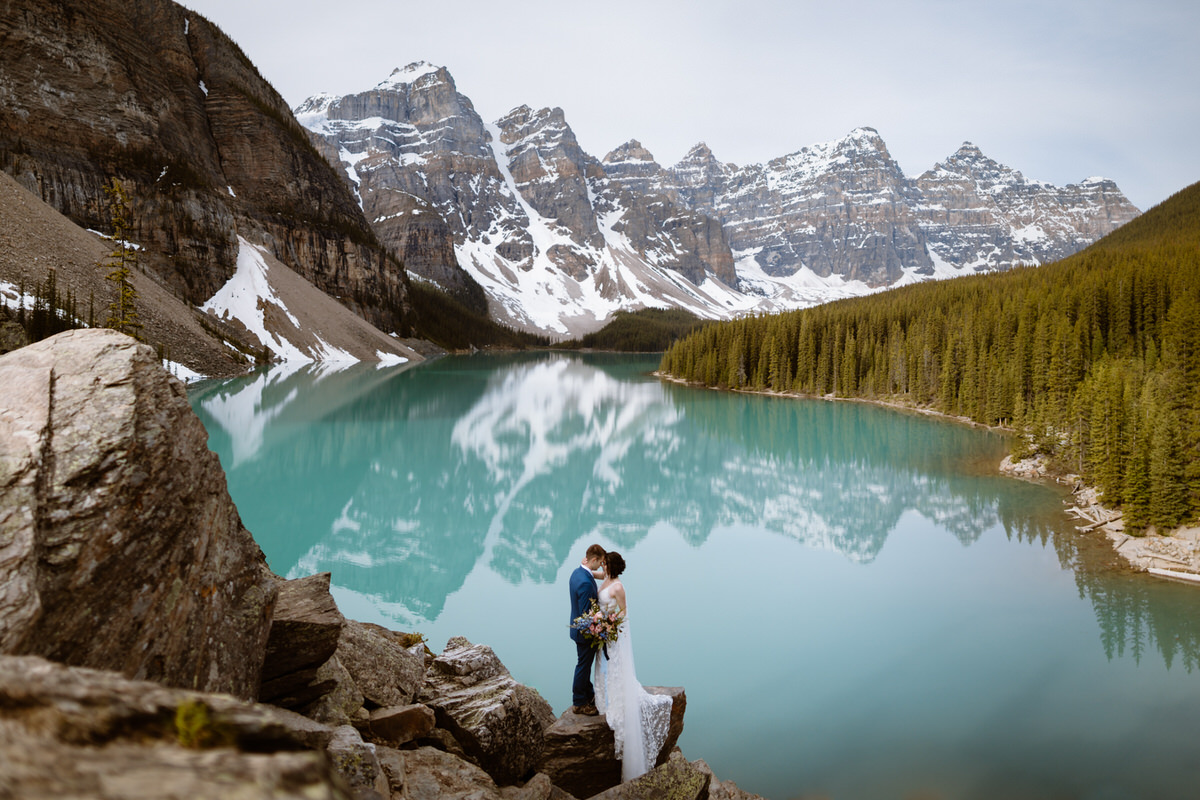
You may have heard them called “adventure” or “mountain” elopements, but hiking elopements are becoming increasingly popular with outdoorsy couples. The idea of binning off the big wedding and saying your vows with an epic view behind you? We can see the appeal.
The idea sounds simple enough – pick a trail, walk somewhere beautiful, say your vows and take the most epic photos imaginable. But have you considered permits, elevation gain, road closures, witnesses, toilets and the possibility of carrying a wedding outfit through three kilometres of mud?
Still interested? Excellent. Let’s get into it.
What is a Hiking Elopement?
A hiking elopement usually involves walking to your ceremony location rather than arriving at a traditional venue. The destination might be a lake, forest clearing, ridge, waterfall or mountain summit. Some couples take on a ten-hour climb, others choose a shorter, more managable route. Some get up at 3am to do a sunrise ceremony, while others hike all day then say their vows just as the sun is setting.
The right route should suit your bodies, clothes, and the experience you want to have. A trail you could complete in activewear may feel different while carrying flowers, extra layers, water, food and half a wedding strapped to your back.
Good hiking elopement / adventure elopement planning begins with the experience you want. Decide how long you would enjoy walking, how remote you want to be and who needs to come with you. Then find a location that fits those answers. A photographer or planner who specialises in these sorts of weddings will be a godsend as they’ll be able to make the best recommendations.
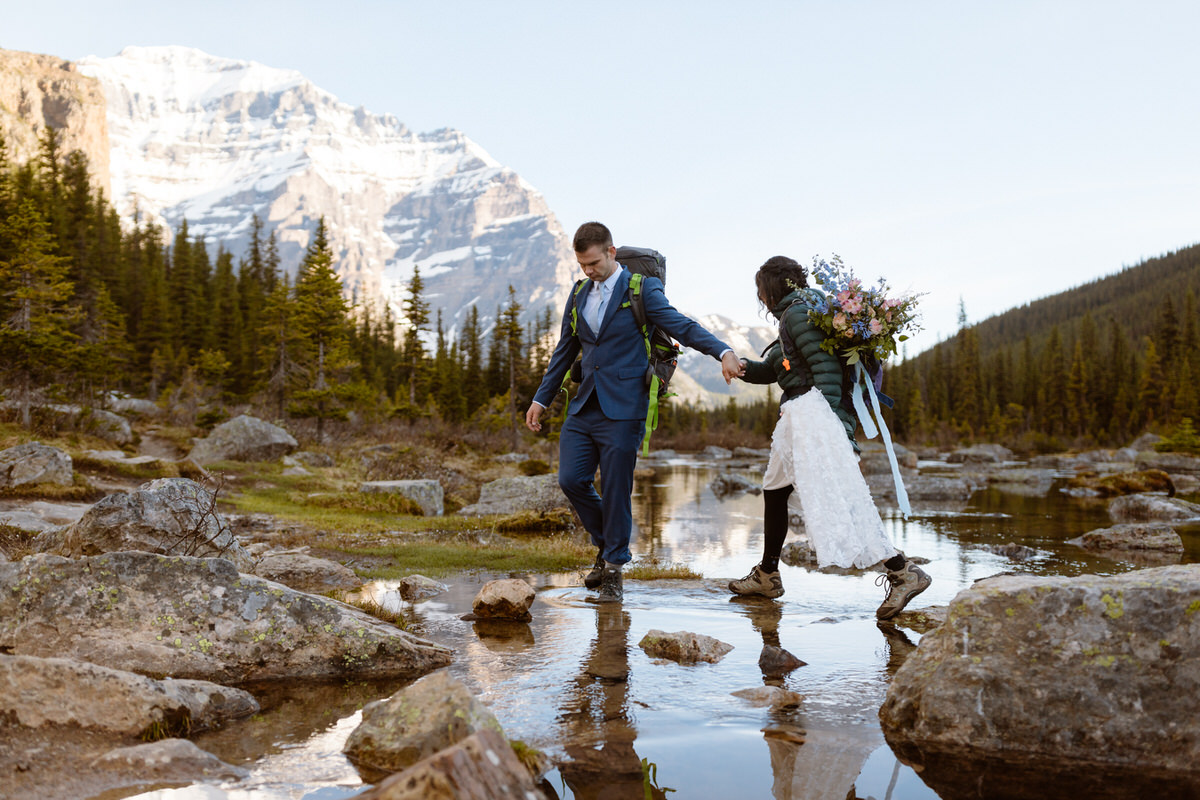
Are You Having Any Guests?
If you are having any guests or witnesses then this may change the plan too. A couple and their photographer can move faster and tackle rougher ground than a group containing children, older relatives or anyone with limited mobility. Even experienced hikers travel at different speeds, especially once nerves, cameras and wedding clothes enter the mix.
Common Formats
Splitting the day can work well when you want both solitude and family involvement. You could exchange personal vows in the mountains, then meet everyone at a cabin, restaurant or campsite. Nobody has to be excluded, and nobody has to pretend they enjoy climbing hills at 4am.
Here are some of the most common options:
⛰️ A private ceremony with the couple, officiant, witnesses and photographer
⛰️ A short group hike followed by vows at an accessible viewpoint
⛰️ A private sunrise ceremony followed by a meal or second celebration with family
⛰️ A full-day hike with the ceremony taking place somewhere along the route
⛰️ An overnight trip with camping, backpacking and vows the following morning
⛰️ A legal ceremony elsewhere followed by a symbolic ceremony on the trail
Planning the Route
Choose your route according to the least confident person attending. Look beyond the distance and check the elevation gain, terrain, exposure, water crossings and availability of toilets. Find out whether the trail requires specialist equipment or involves scrambling. Read reports from people who have completed it recently, as conditions can change throughout the year.
Snow may remain at higher elevations long after it has disappeared from nearby towns. Wildfires, flooding, maintenance work and wildlife activity can also close trails or restrict access. Build your plans around the conditions rather than assuming a saved Instagram post tells the whole story.
Allow more time than you would for an ordinary hike. You will stop for photographs, adjust clothing, drink water and wait for the group to catch up. Nobody wants their wedding morning to turn into a furious uphill march because the ceremony has fallen forty minutes behind schedule.
Pro Tip: Build your timeline backwards from the light, not forwards from the trailhead. Set the ceremony at the golden window, subtract the ascent at one hour per kilometre, then subtract another forty minutes of buffer. If the departure time that falls out is before dawn, you need headlamps and a shorter walk, not a faster pace.
Finding Your Photographer
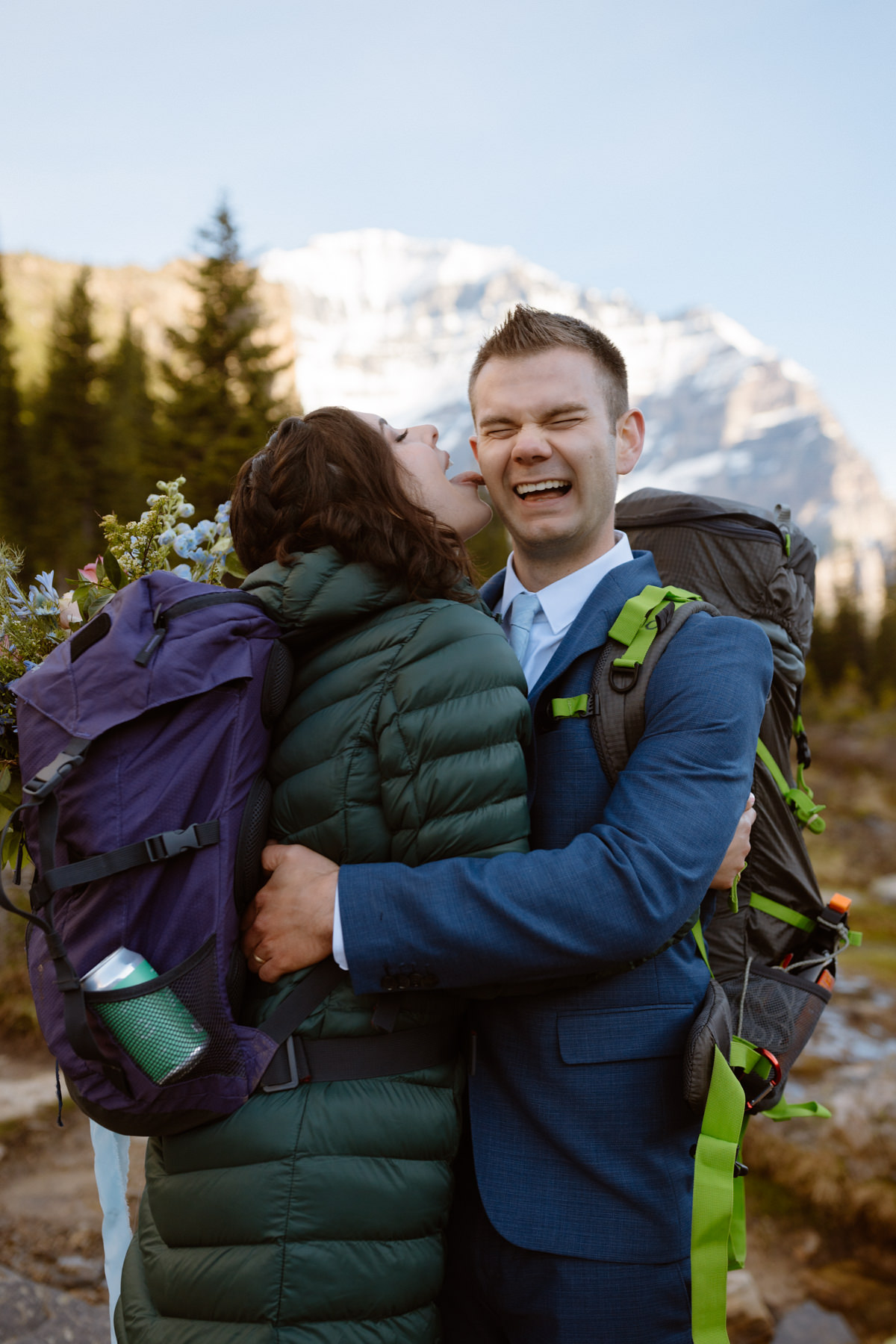
Your photographer should understand the demands of working outdoors. Ask whether they have photographed weddings on similar terrain, how they protect their equipment and what happens when weather makes the original location unsafe. They should be comfortable carrying their own kit and working without access to power, shelter or a conveniently placed coffee shop.
A mountain portfolio can tell you plenty, but direct questions will tell you more:
⛰️ Have you completed this route or something similar?
⛰️ How much additional time should we allow for photographs?
⛰️ What happens if the trail or access road closes?
⛰️ Do you offer an alternative date for severe weather?
⛰️ Do you carry emergency equipment?
⛰️ Can you help us find a safer or more accessible backup location?
Some locations may also require permits. National parks, protected landscapes and popular viewpoints may restrict ceremonies, commercial photography, group sizes, decorations and amplified music. Some locations also require timed entry tickets, parking reservations or shuttle bookings.
Rules for ceremonies inside national parks can differ between parks and individual sites. Be sure to confirm the requirements for your exact location way in advance.
What to Wear
Its likely you will want to do the ceremony and photos in your wedding clothes but these might not be the best for hiking! Hiking boots with a wedding dress do look good though and remain considerably more useful than a pair of stilettos on loose rock!
If you are going to change when you arrive, make sure the gown you chose won’t crease in transit. You are likely going to need to pack it down small and carry it in a backpack rather than a large garment bag. Synthetic fabrics like polyester, polyamide (nylon), and elastane blends crease the least.
Leave No Trace
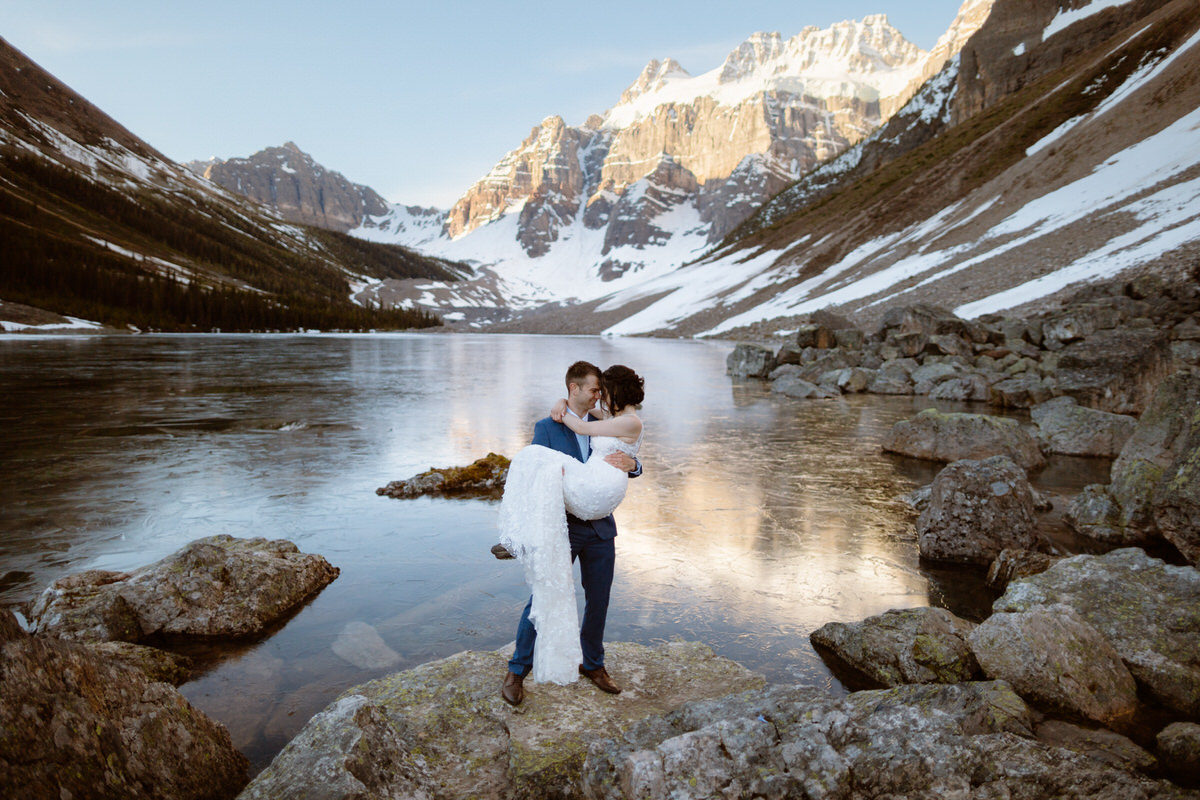
Flowers, decorations and confetti may be restricted in protected environments. Avoid leaving anything behind when you leave – bio-degradable or not! Stay on established paths where required and give wildlife plenty of space. A landscape does not need a floral arch hammered into it to look ready for a wedding.
Finally, make a backup plan that you would genuinely enjoy. Choose a lower trail, sheltered woodland, lakeside location or nearby cabin rather than treating Plan B as a sad consolation prize. Bad weather may change the view, but it does not automatically wreck the day.
A hiking elopement can be challenging, serene, chaotic and completely exhilarating. Pick a route that matches your abilities, give yourself enough time and prepare for conditions to change. The mountain does not care about your wedding schedule so work with it, pack snacks and wear the hiking boots.
Suppliers
- Photography: Film & Forest