
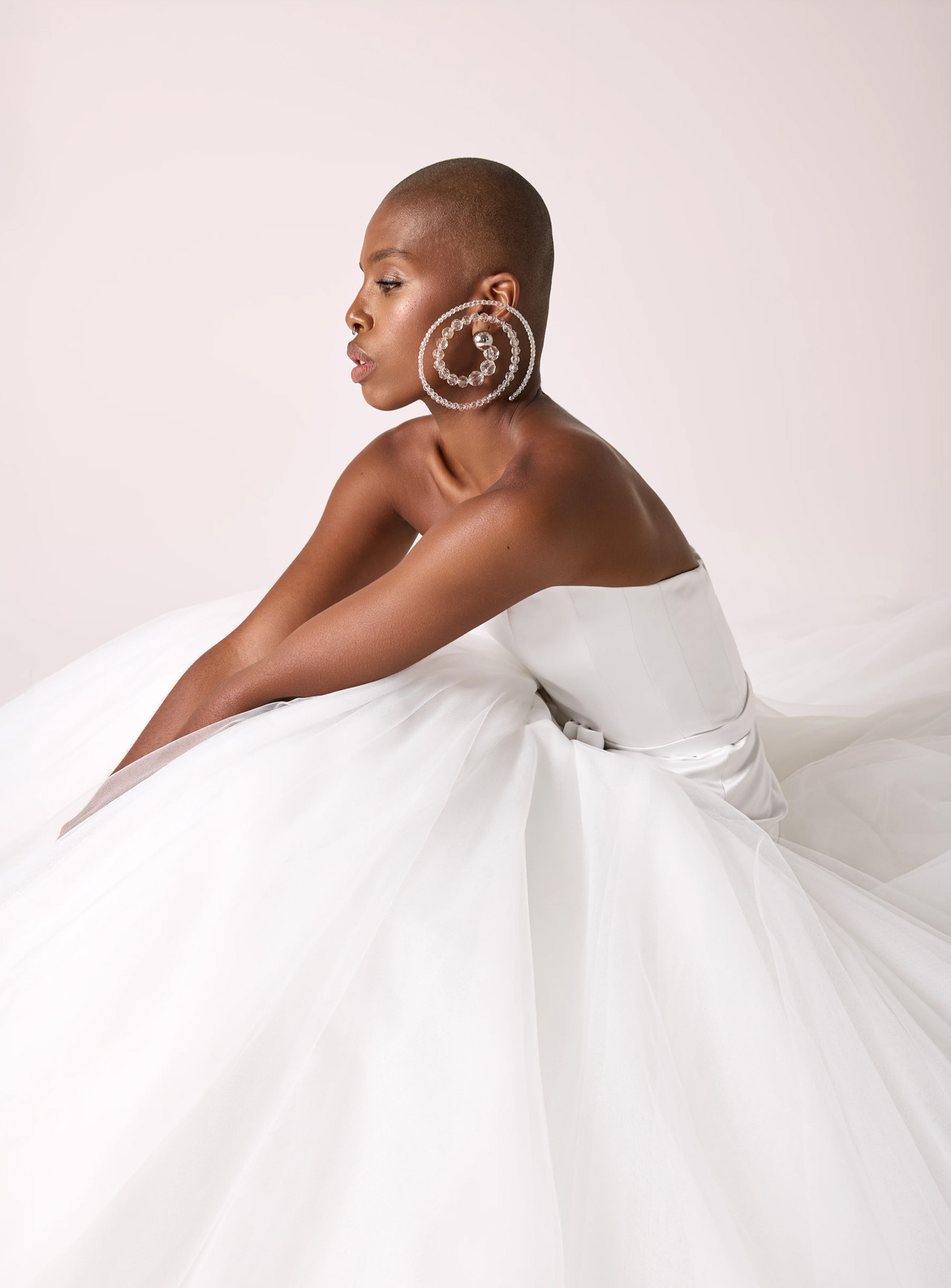
How you feel in your wedding outfit should be just as important as how you look in it. That bodice you loved in the mirror might dig into your ribs when you sit down, the skirt might make getting into a car surprisingly complicated, and if you’re already pulling up the neckline after five minutes in the fitting room, imagine doing it through an entire wedding!
Understanding the most common wedding dress shapes is a great starting point. From there, fabric, construction and alterations will help you work out what feels right for you.
Common Wedding Dress Shapes
Try on the shapes you’re curious about but also give yourself permission to experiment. You might love exactly what you expected, or find yourself drawn to something completely different when you put it on.
A-Line
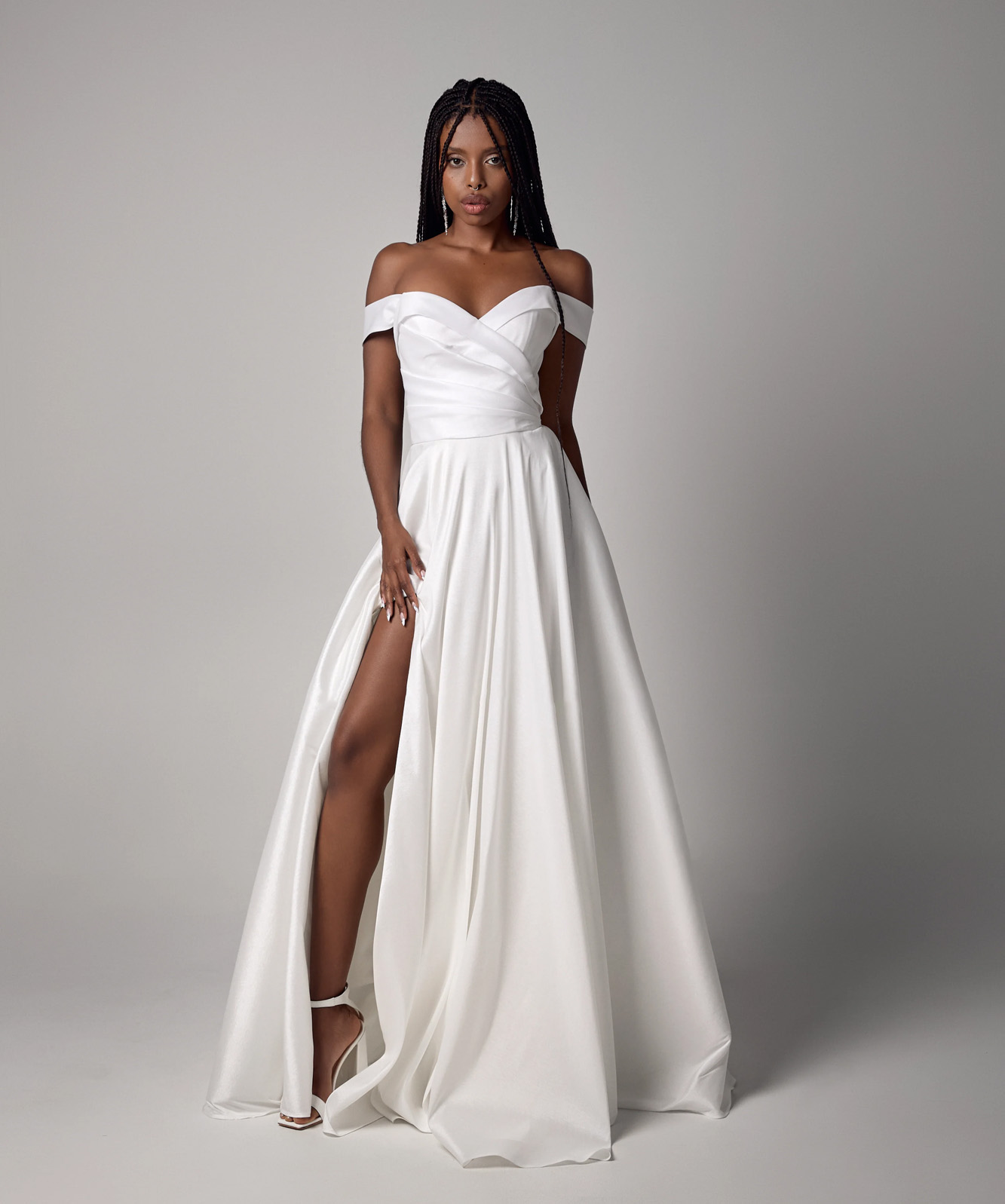
An A-line dress has a fitted bodice and a skirt that gradually widens towards the hem. The amount of volume varies, from a gentle flare to a much fuller skirt. This shape creates a well-proportioned silhouette so it it flatters all figures and body types. The room through the hips and legs can make A-line wedding dresses easy to walk and dance in.
Ball Gown
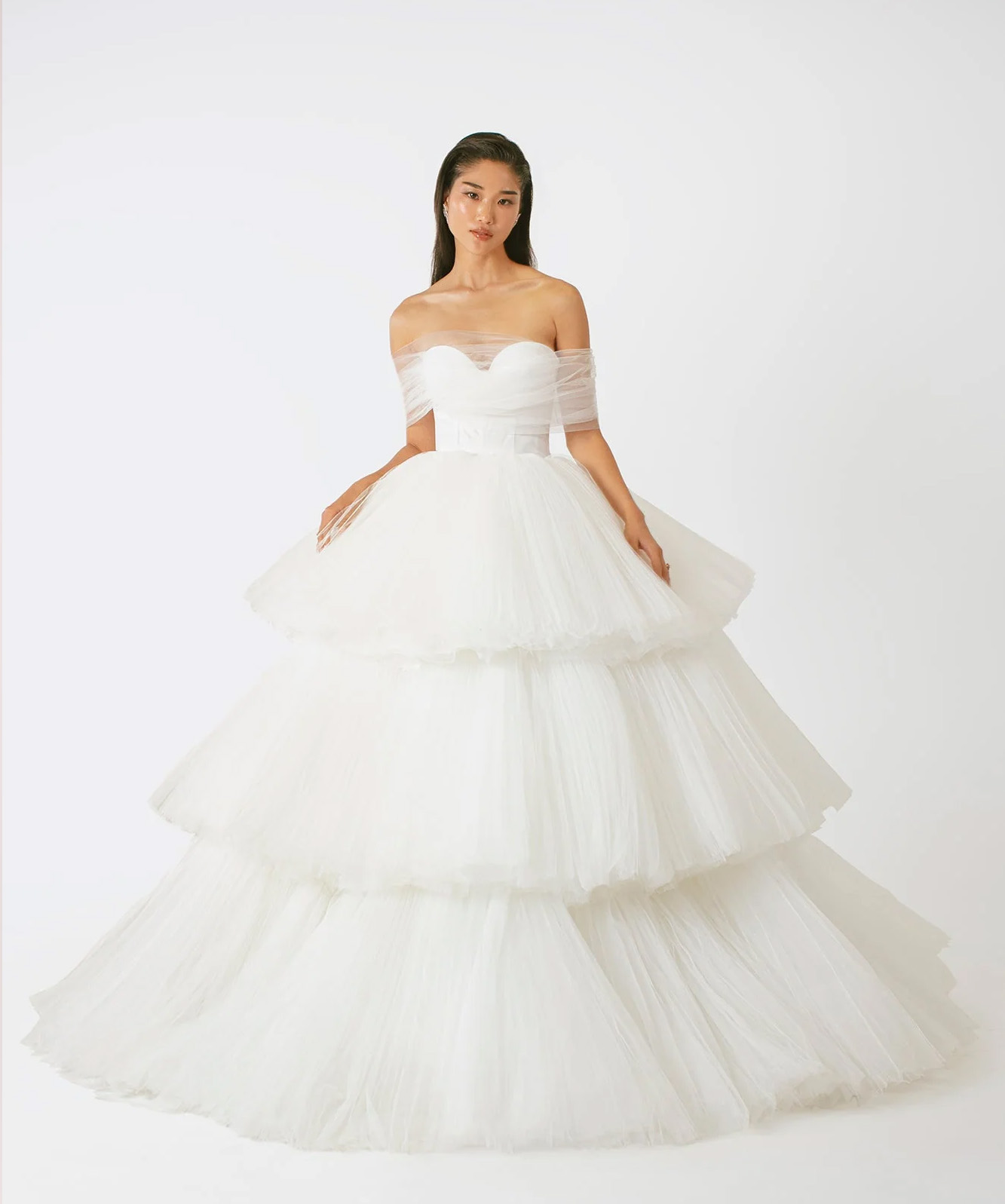
Ball gowns are the dresses with the big skirts. They pair a fitted bodice with a full skirt that flares out from the waist. If you love volume, this is the shape for you. The skirt can be simple and more structured, or have layers layers of soft tulle.
There’s usually plenty of room to move your legs, but the weight and size of the skirt can take some getting used to. Try sitting down, walking through a doorway and turning around during your fitting, with any intended underskirt in place. Ask how to gather the fabric for stairs or if a bustle can be added for dancing.
Sheath and Column
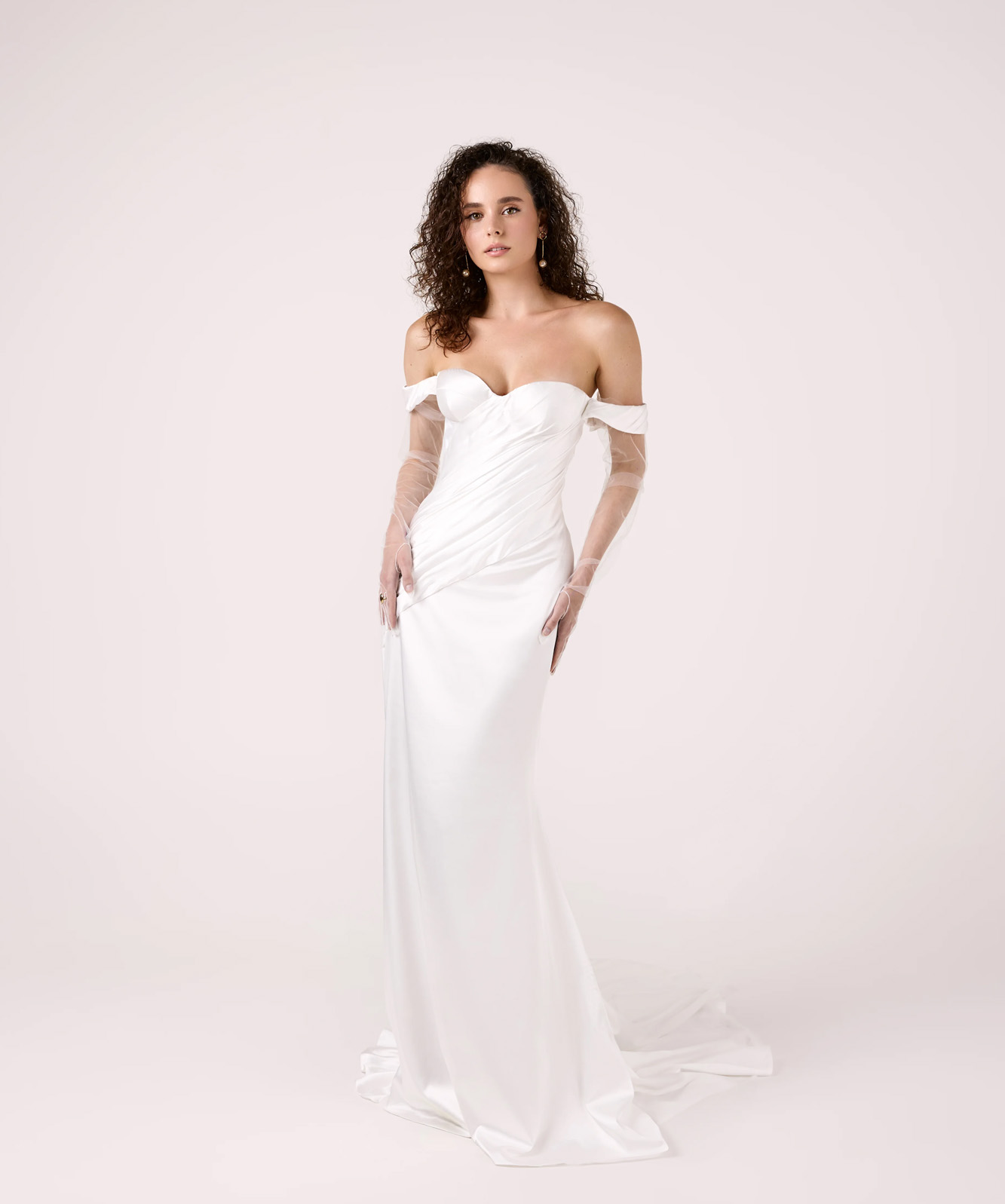
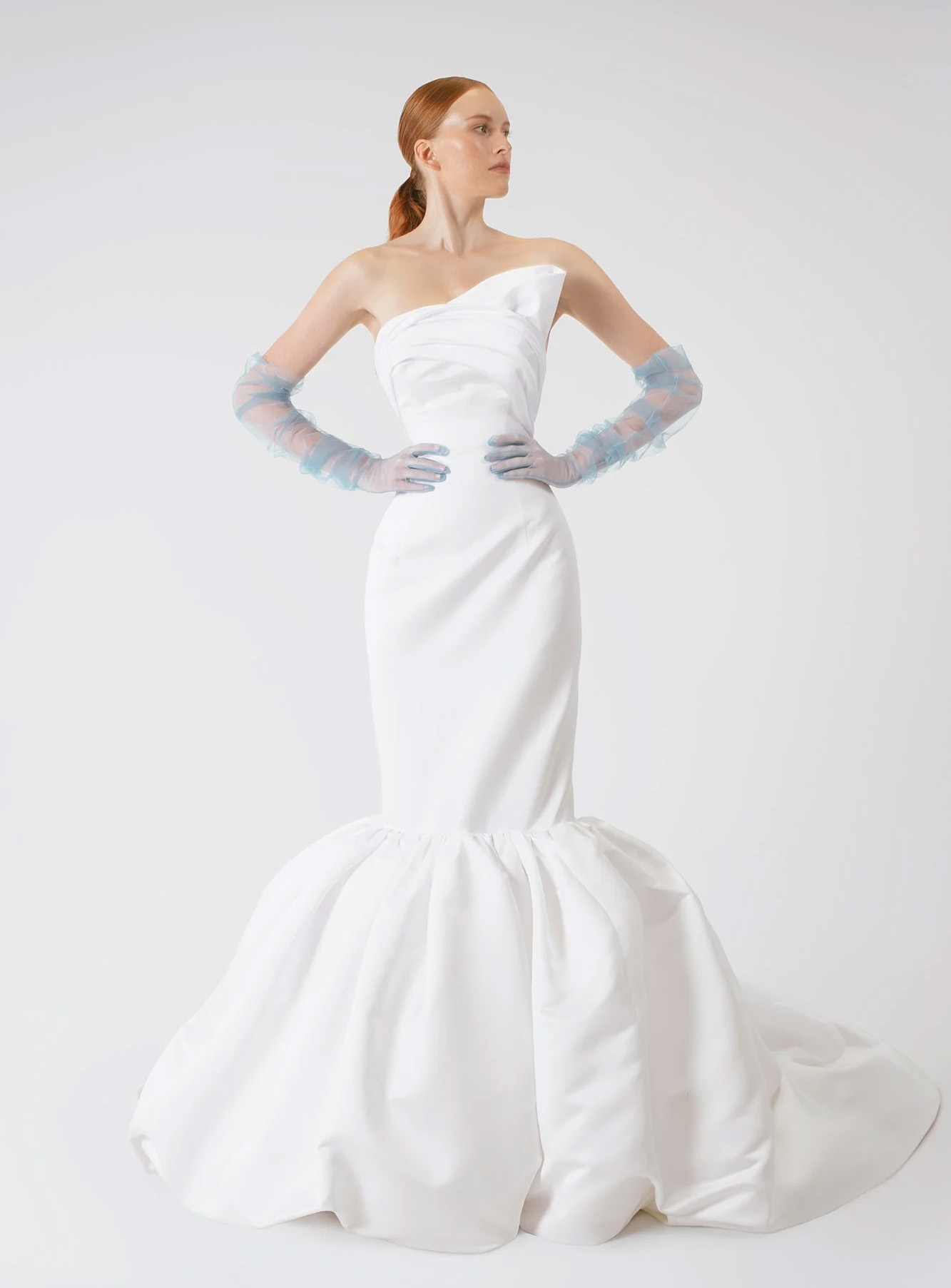
Sheath and column dresses follow a relatively narrow line, with less skirt volume. They usually skim the body loosely and offer fluidity and softness, following your natural line.
The important thing with this style is to test how you can walk in it. A narrow skirt needs enough room, stretch or a suitably placed slit for you to move comfortably. Take a few proper steps, sit down and try stepping up onto something.
Fit-and-Flare
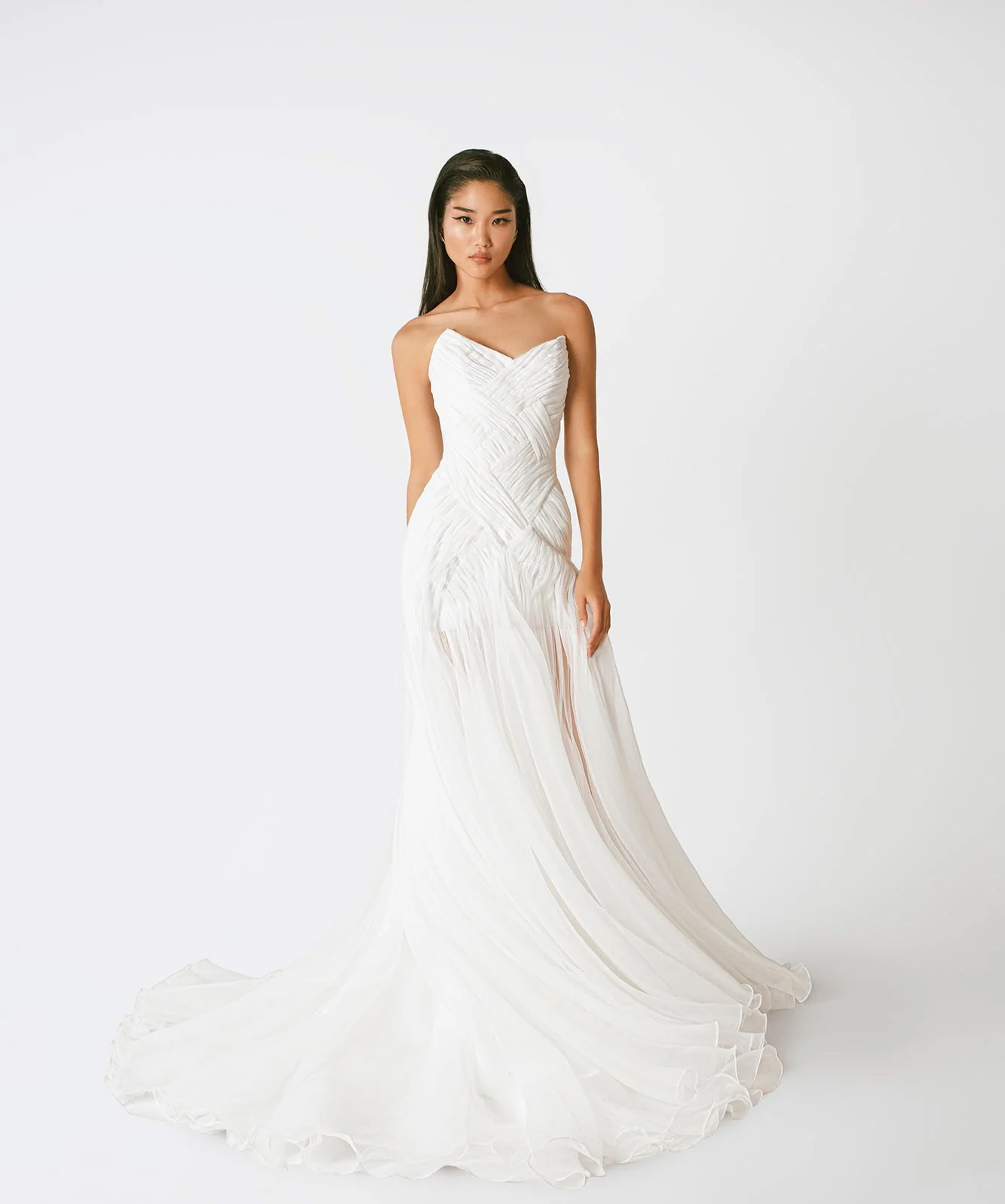
A fit-and-flare dress follows the body through the bodice and hips before kicking out into a fuller skirt, either just below the hips or knees. You may have also seen these styles referred to as mermaid dresses.
This shape can limit movement so try sitting for several minutes and check how the fabric feels across your hips and thighs. If dancing is high on your priorities, give that a test too.
Slip
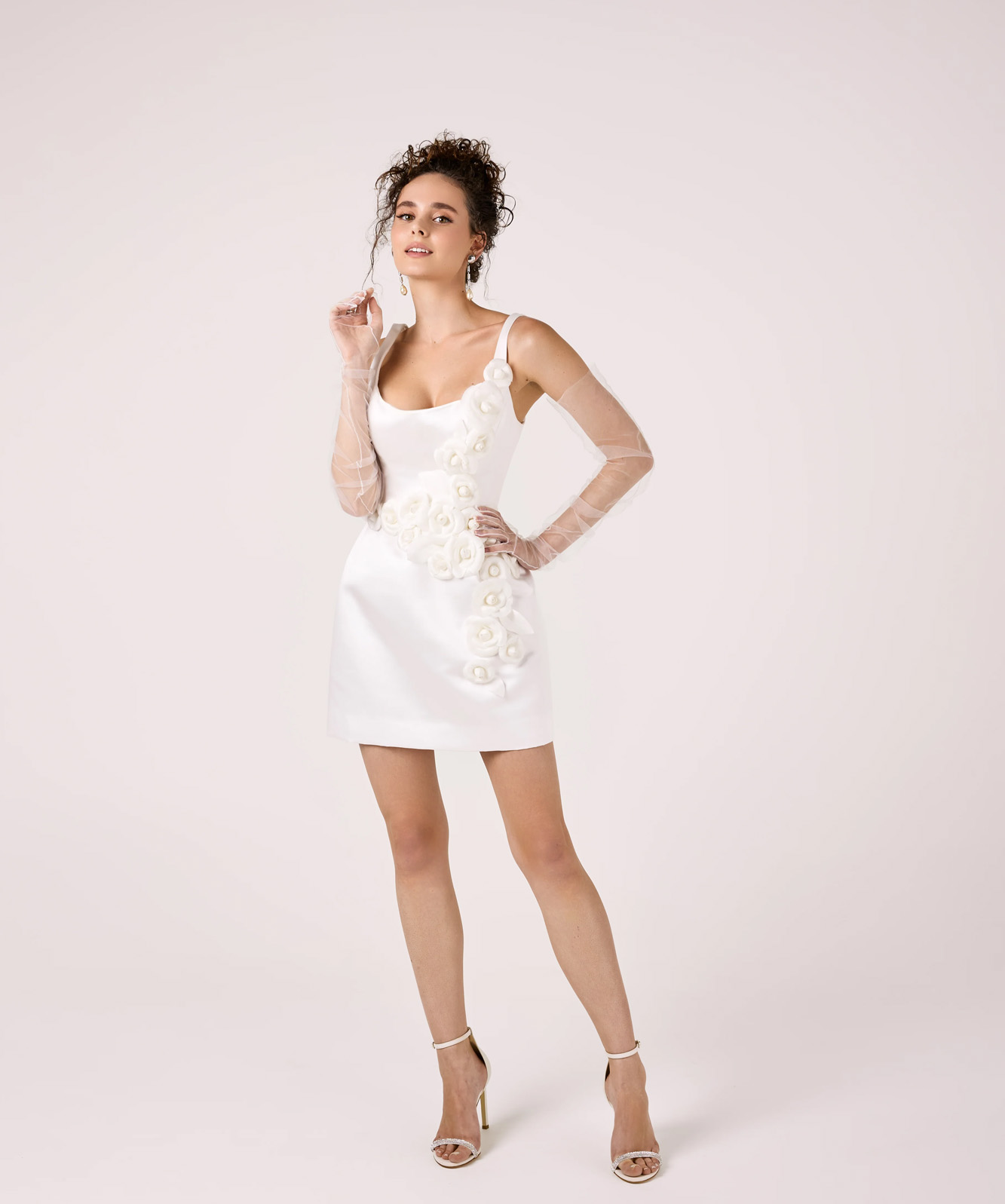
Slip dresses usually have a very simple shape, fine straps and relatively little internal structure. Many are cut on the bias, diagonally across the fabric, which helps them drape around the body.
They can feel light and easy to wear, but check how the dress behaves when you move around. Lean forward, sit down and raise your arms to see whether the neckline and straps stay where you want them. Try it with the underwear you plan to wear, as fine fabrics can reveal seams or feel different with another layer underneath.
Fabric, Construction and Fit
Two dresses with the same silhouette can feel completely different once you put them on. The fabric, lining and internal construction are really important.
Lift up the dress and notice how heavy it i. A dress with several layers may feel manageable for a few minutes but become tiring over a longer day. Check the fabric against your skin, particularly around the underarms, neckline and any embellished areas. Lots of embellishments, glitter or lace appliques can become scratchy quickly, especially under your arms.
Think about your venue and the season too. For a summer wedding, ask about the lining and how many layers you’ll be wearing. For an outdoor ceremony, consider how the hem and train will cope with the ground.
Finally, look at the structure of the gown. A well-fitted bodice or corset will provide support and help the dress stay in place. Boning, cups and waist support should feel secure while allowing you to breathe fully and sit comfortably. Flag anything that rubs, pinches or presses during your appointment.
Alterations
The majority of wedding gowns are made-to-order, including those available through MISSIA Bridal. This means they are made to your closest size and then altered to fit you perfectly. Whether you are buying off the rack, getting something made to order or going completely bespoke, almost all wedding gowns will require some alterations. Ask at your appointment about the cost and amount of alterations you might need before committing.
Take your planned underwear and shoes to fittings, or discuss suitable alternatives with your seamstress if you haven’t chosen them yet. Both can affect how the dress sits and where the hem falls.
Practical Details
A few small design choices can make wearing your dress much easier.
Managing the train: Ask about a bustle or wrist loop, and practise using it. Have someone who’ll be there on the day learn how it works.
Closures: Find out how much help you’ll need with buttons, hooks or lacing, including when getting changed later.
Underwear and support: Choose what feels good and works with the dress. Shapewear is optional, and any extra support should be comfortable when you sit and move.
Pockets: If your dress has them, test them with whatever you intend to carry. A phone can affect the way a light skirt hangs.
Detachable details: Removable sleeves, overskirts and trains can give you options throughout the day. Check the fastenings and try the dress with each element removed.
Toilet access: Work out how you’ll lift the skirt or undo the dress. It’s a useful question to ask while someone is there to show you.
Whether you want drama, volume, colour, sparkle or a close fit your comfort is still vitally important. Weddings are a long day and you’ll be talking a million pictures, so give yourself time to find the combination that works for you, and choose a dress you’re really excited to spend the day wearing.