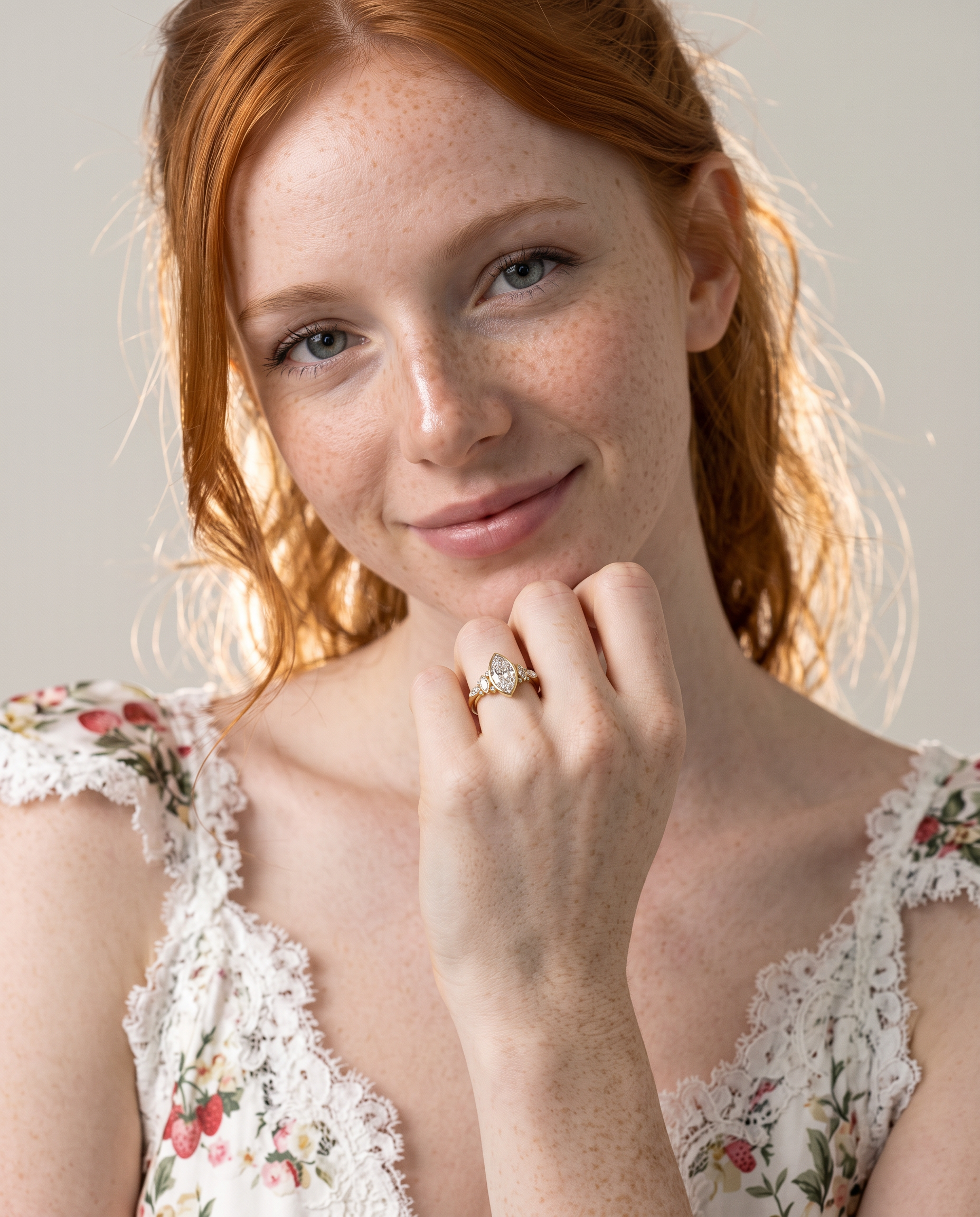
An oval diamond on a twisting vine band. A pointed marquise with a halo tucked underneath. A starburst cluster with an intricate outline around the centre. You can love all three in photographs and still have no idea which you would choose.
If there’s a plain solitaire saved between them, that doesn’t mean you’ve misunderstood the assignment. Looking for an alternative engagement ring doesn’t oblige you to choose the most elaborate thing in the shop.
The useful part is working out which detail keeps pulling you back, and whether you enjoy it as much on your own hand. That might be the stone’s outline or a tiny feature you can only see from the side. For an unusual lab-grown diamond engagement ring, a few deliberate comparisons will tell you much more than another evening of scrolling.
If colourful rings keep sneaking into your saved pictures, give them a proper chance. Lily Arkwright’s wider selection of engagement rings includes other gemstone options. Check each stone’s properties and care before comparing it with a diamond. You don’t have to stay with the material you first searched for.
Find the diamond shape you keep noticing
Look through your favourites and cover the bands with your thumb. Are the centre stones similar? You might discover that nearly everything you’ve saved has a long, narrow outline, even though the settings are wildly different.
Two fairly simple settings in the same metal colour make that comparison easier. An oval and a marquise are a useful pair: both have an elongated outline, but the oval has rounded ends and the marquise comes to a point at each end.
How much of your finger does each cover? Do you like the sharper silhouette, or keep coming back to the softer one? There is no need to choose a more dramatic shape simply because you’re planning an alternative wedding.
Even two ovals can look quite different when one is shorter and wider. The shape name gets you started; the dimensions of the particular stone help explain why one feels right and another doesn’t.
Decide where you want the detail
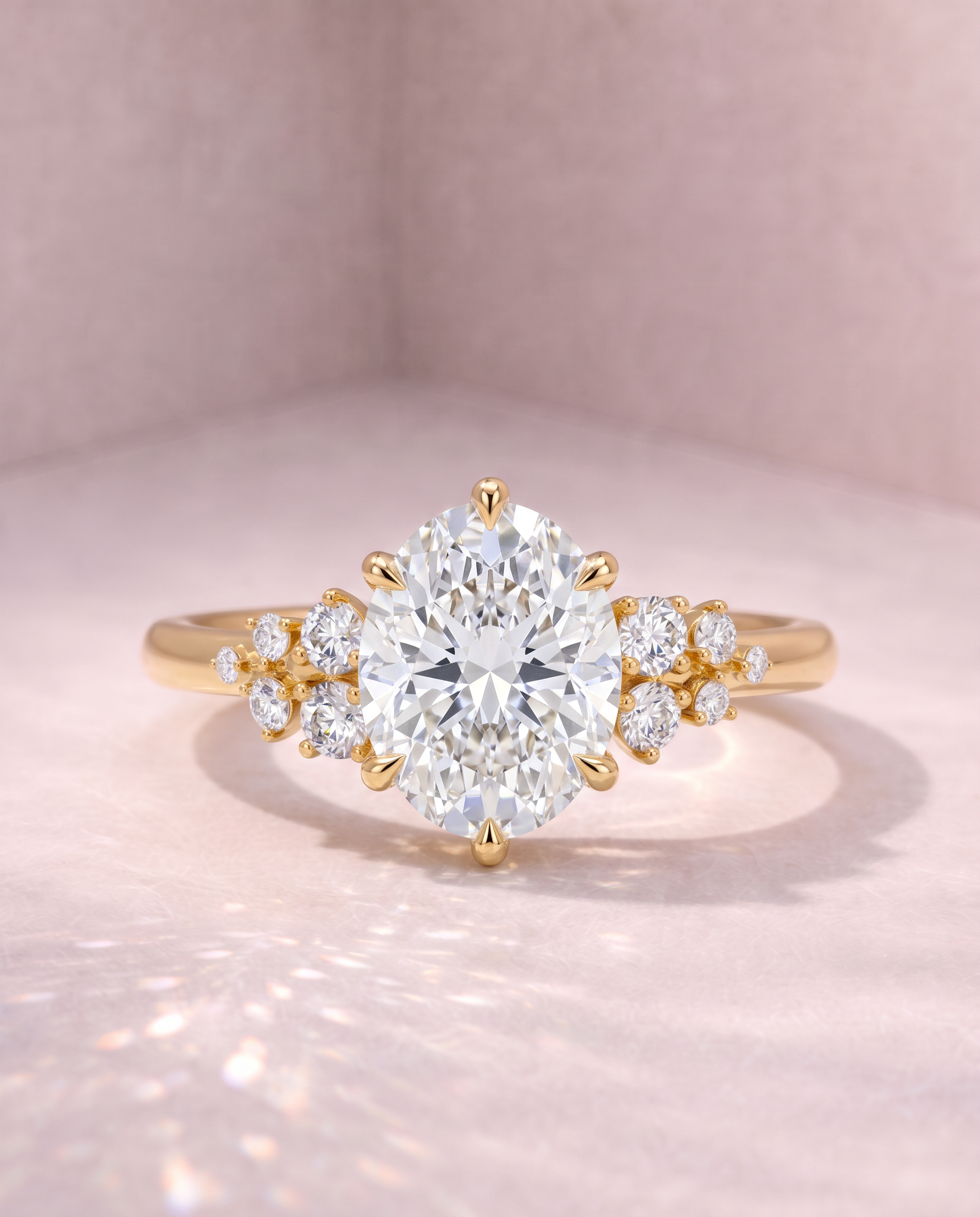
For a closer look at the setting, Lily Arkwright’s lab diamond collection offers a useful comparison. Eden and Alya in 18ct yellow gold both use an oval lab-grown centre diamond, but put the decoration in different places.
Eden draws your eye along the band. Its twisting, diamond-set shoulders give it a vine-like shape. Those curves continue to either side of the oval, so a close crop of the centre would miss much of its character.
Alya builds the decoration around the centre. A starburst cluster frames the oval, with further diamond detail along the shoulders. Its outside edge makes a different impression from Eden’s more open outline. Does that whole starburst appeal to you, or is it one tiny detail in the enlarged photograph? It’s worth seeing the complete ring from a little distance.
Comparing the same metal and similar centre-stone dimensions will help you judge the settings fairly. Otherwise, the biggest pictured diamond can steal the whole conversation.
You might prefer the simplest ring from above and enjoy the detail underneath. You might want a cluster you can spot from across the table. Either gives you a more useful starting point than trying to decide whether a ring is unusual enough.
Get clear on the diamond itself
A lab-grown diamond is a diamond grown in a controlled environment. Moissanite is a different gemstone. The distinction matters when similar-looking rings turn up in the same search.
Lab-grown diamonds generally cost less than comparable natural diamonds, but individual stones still vary in quality. IGI’s consumer guide explains what to consider. Knowing the origin alone won’t tell you how a particular diamond will look.
An independent laboratory report helps you understand the centre stone you’re considering. Ask to see it, check its number with the issuing laboratory and have the jeweller explain anything unfamiliar. It is most useful alongside the actual diamond or a video of that stone. You still get to decide which one you like looking at.
The way a diamond is cut affects its appearance, too. If you love geometric jewellery, try an emerald cut beside a radiant. The emerald cut’s stepped facets give broader reflections, while a radiant’s brilliant-style facets create a busier pattern of sparkle.
If responsible sourcing matters to your choice, ask for evidence about the particular diamond and metal. Lab-grown origin on its own does not establish the environmental impact of the finished ring.
Spend on the details you would miss
A bigger centre stone can quietly eat the budget you meant to spend on the setting. A spending limit for the complete ring helps keep those decisions in proportion. The specifications beside each price should include the metal and any changes you’ve requested.
Carat figures need a closer look, too. A one-carat centre stone and a cluster with a total diamond weight of one carat describe different arrangements. Neither number tells you the width of the finished ring.
Carat measures weight, so the centre stone’s dimensions in millimetres are useful for judging size. With a cluster, the overall dimensions of the setting matter as well. That is the outline you’ll see on your hand.
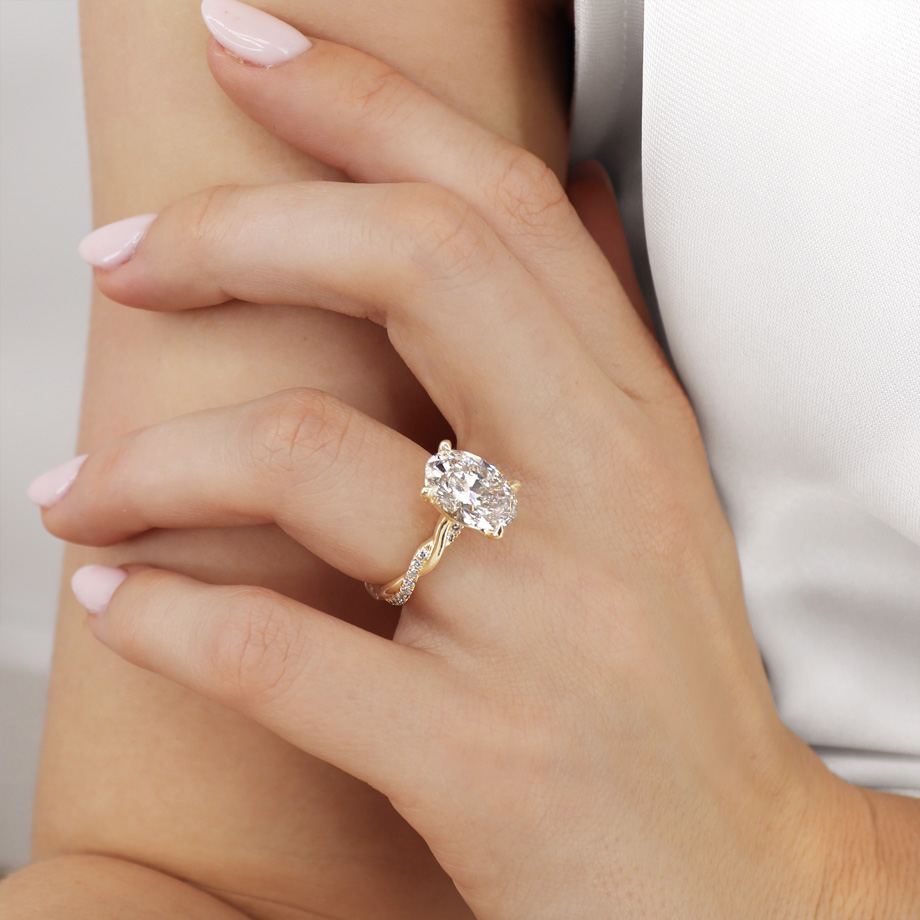
Product photographs can complicate things. The ring pictured may have a different specification from the option selected in the menu. An on-hand photograph of a comparable size, or a sample with similar dimensions, gives you more to work with than an enlarged close-up.
If the price goes beyond what you want to spend, change the part you care about least first. If the twisting band is the reason you love a ring, compare smaller centre stones in that setting. If you mainly want the pointed silhouette, try the same shape in a simpler design. Keep the feature that made you stop scrolling.
Take your shortlist off the screen
Three contenders make a manageable shortlist. Beside each, jot down the feature you would miss if you chose another ring, then the question that still needs answering.
“Love the oval and twisting shoulders; need to see the setting height in profile” gives a jeweller much more to work with than “something unusual”. The design name, metal and stone dimensions will help you find the same version again.
At a try-on, wear the jewellery you normally wear and see how the ring feels alongside it. A look away from the brightest display lighting is useful, too. Relax your hand rather than holding it in a permanent proposal-photo pose. Tell the jeweller how you use your hands at work, so you can discuss the setting’s height and any exposed points.
If you’re buying an engagement ring online, take time over the retailer checks as well. Before ordering, get the resizing, returns and customisation terms for your chosen specification confirmed in writing.
Then go back to the note beside each contender. The elaborate setting you loved online may feel like too much on your hand, while the quieter ring keeps catching your attention. You can keep admiring the first one in photographs. Ask to see the favourite again in the metal and stone size you would actually order.