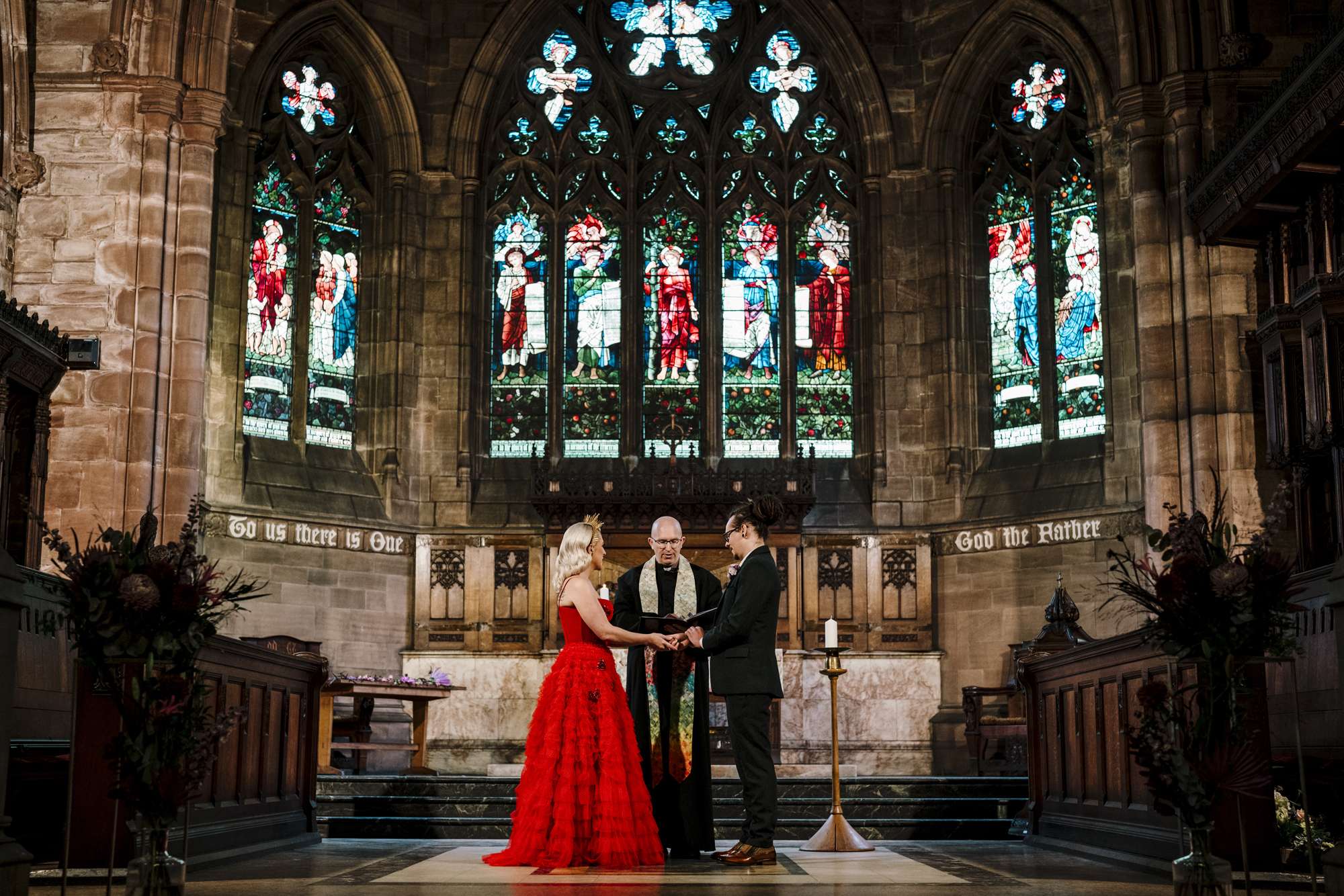
We got married in a church. The ceremony part of the day wasn’t something we were particularly fussed about but it meant a lot to my parents so we made the decision to do it. Remember, this was 2008 so we didn’t actually know much about the alternative options – celebrant-led, humanist, doing the legal bit at the register office and having a friend perform a blessing. But did it make our wedding any less right for us? Absolutely not.
Rock n Roll Bride has always maintained that an alternative wedding has very little to do with trying to shock people or being different for the sake of it. It means planning a wedding that reflects who you are, what you believe and how you want to begin your marriage.
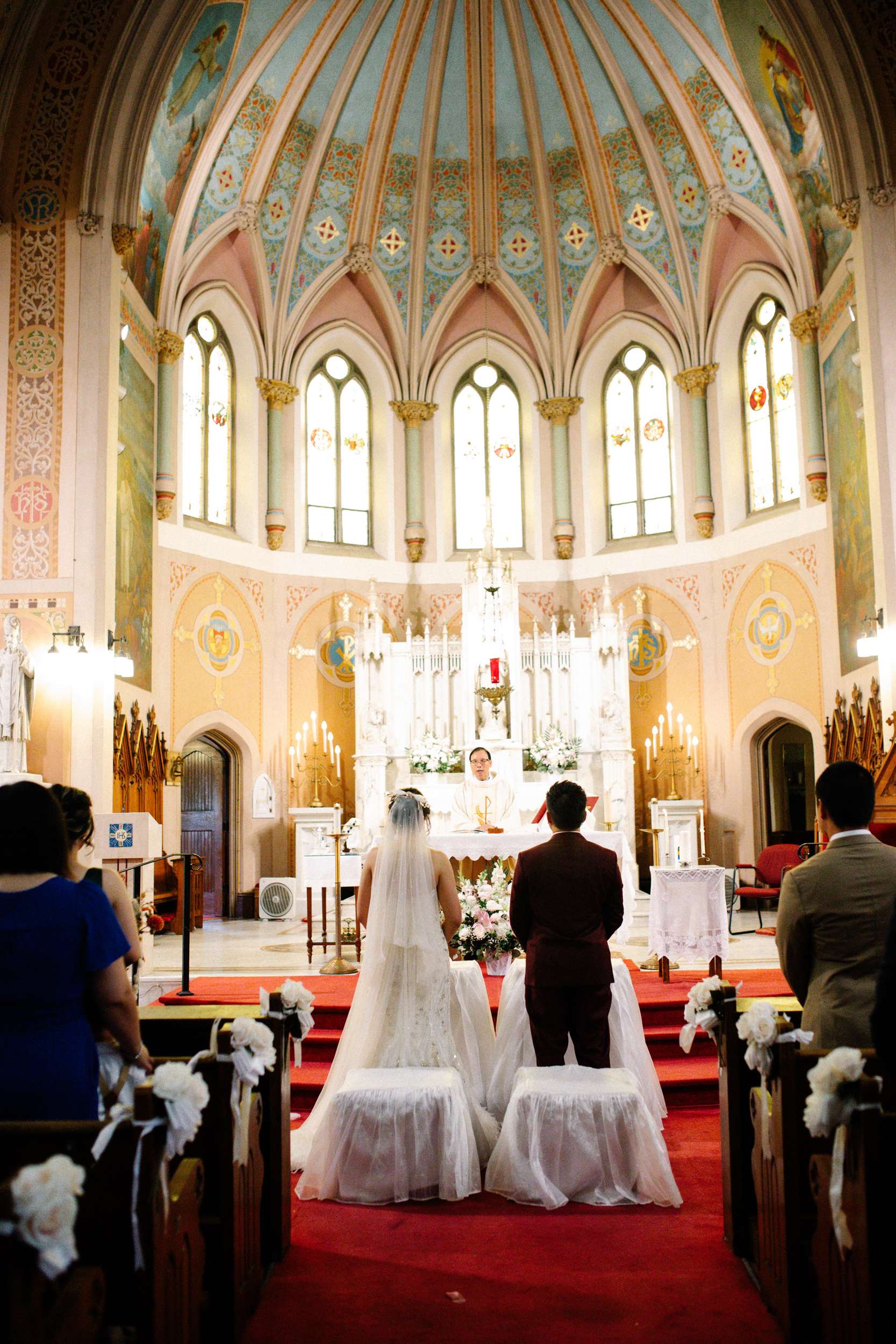
If religion is integral to your life, your relationship or your family, a ceremony in a church, temple, mosque, synagogue or another place of worship can be entirely consistent with that. You can have a traditional religious ceremony and still be a complete badass.
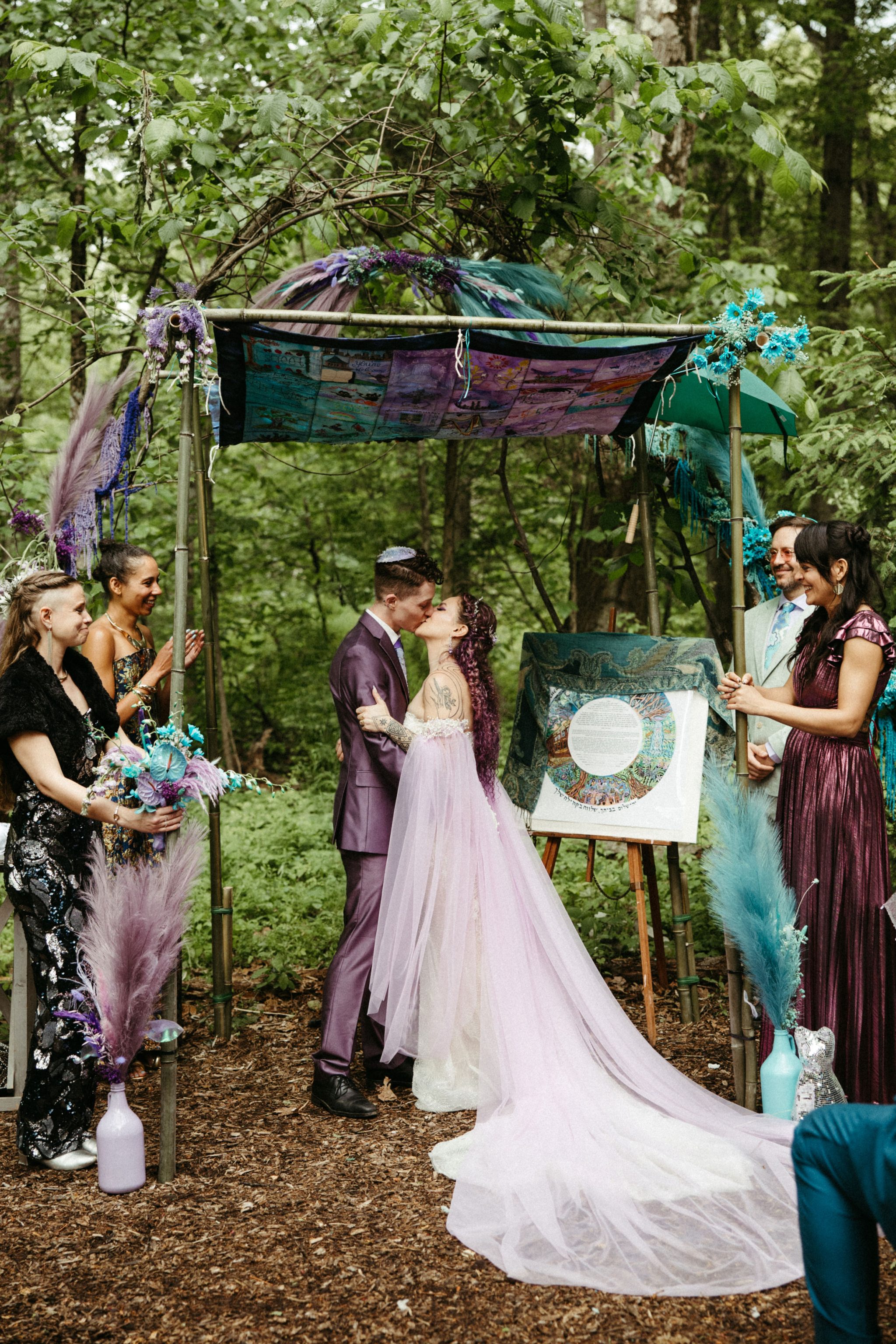
Alternative weddings often get reduced to a collection of stereotypes and visual cues – tattoos, black dresses, neon signs. leather jackets. skulls, coloured hair… A ceremony in a warehouse conducted by a drag queen or a woodland led by your bestie. And while we love all of those things, none of them automatically makes a wedding personal. A black dress chosen because Instagram said it was edgy can be every bit as conventional as a white one worn in church.
Your beliefs say far more about you than your centrepieces ever will.
Start With What the Ceremony Means to You
For some couples, a religious ceremony provides a sense of connection to their faith and community. For others, it carries cultural or family significance. You might want to marry in the building where your parents or grandparents held their wedding. You might value the prayers, music and rituals you grew up with. Your faith might shape the commitment you are making to one another. These are all valid reasons to choose a religious wedding.
The important part is making the decision consciously. Talk about why the ceremony matters to each of you and what you hope to feel during it. If one partner is religious and the other is not, discuss what participation will look like and whether either person feels uncomfortable, pressured or excluded.
A ceremony should represent the people getting married. Family expectations can be part of the conversation, but they should not drown out your own views.
Find Out What Can Be Changed
Places of worship and religious leaders vary enormously. Some ceremonies follow a set structure with little room for adjustment. Others allow couples to choose readings, prayers, music and elements of the service. Ask questions before assuming that everything is fixed.
Can you choose your entrance music? Are secular readings permitted alongside religious ones? Can friends or relatives take part? Can you write any part of your vows? Are there restrictions on photography, flowers, decorations or confetti? How does the venue feel about interfaith, queer or gender-nonconforming couples?
Find out which rules come from the faith, which are required by law and which are simply the preferences of that particular officiant or venue. “That’s how weddings are usually done here” is different from “this is a required part of the ceremony.”
You might have more freedom than you expect. If the restrictions feel incompatible with your values, you can speak to another religious leader or look for a different place of worship within your faith. A warm, collaborative officiant can completely change the experience.
What Can You Wear?
Some religious buildings have expectations around clothing. These might involve covered shoulders, longer hemlines, head coverings or removing shoes. Ask for the actual requirements rather than relying on assumptions about what looks “appropriate”.
Once you know the boundaries, you can work within them creatively. A sheer cape, embroidered jacket, dramatic veil, custom suit or detachable sleeves can meet a dress code without flattening your style. A ceremony look can also be changed or adapted for the reception.
You are still allowed to look like yourself. Pink hair does not become less pink beneath a veil. Tattoos, piercings, platform boots and a black wedding outfit do not cancel out faith. Personal style and religious belief have coexisted for centuries, despite what a few beige bridal moodboards might suggest.
Dress requirements should also be communicated equally and respectfully. If one partner is expected to alter their appearance while the other faces no restrictions, it is reasonable to question that. Ask what is genuinely required and decide whether those conditions work for you.
Tradition Can Be Personal
Alternative couples sometimes feel pressure to reject every established wedding tradition. That just becomes another set of rules!
A ritual can carry deep meaning when you understand it and choose it willingly. You can exchange traditional vows because the words matter to you. You can include hymns because you love singing them. You can walk down the aisle with your dad, your mum, both parents, a sibling, your best friend or nobody at all.
Keep the traditions that connect with you. Question the ones that feel uncomfortable. Leave out whatever you are permitted to leave out.
The reception may offer more flexibility if the ceremony has a fixed format. You can follow a morning in church with lunch at your favourite pub, a full goth banquet, a village hall disco or a party in your back garden. Religious ceremony does not equal compulsory chair covers.
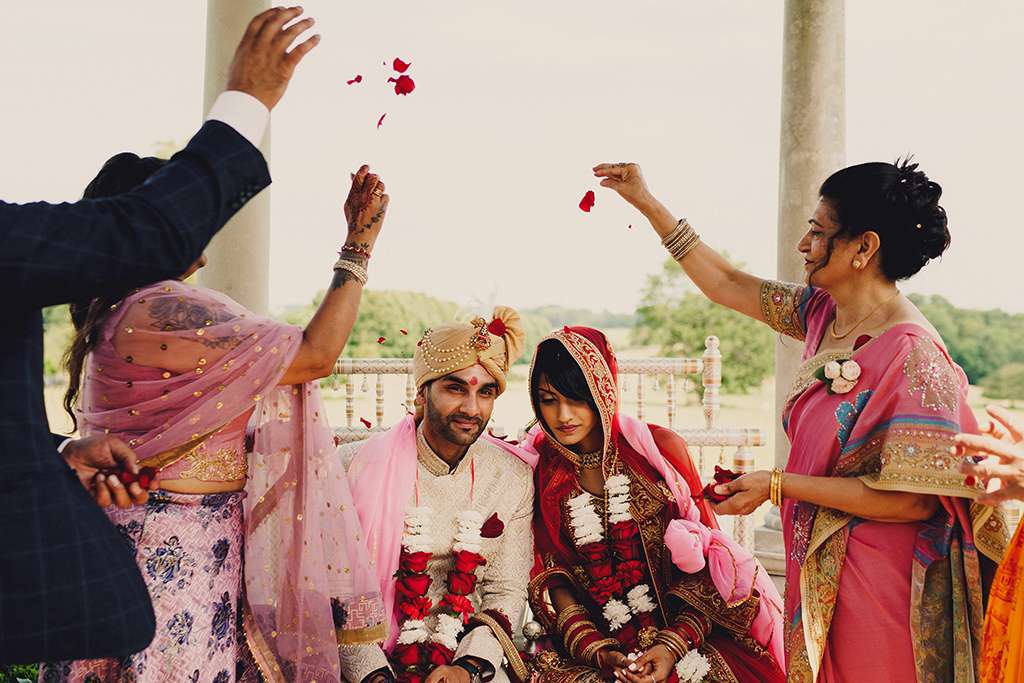
What About Interfaith Weddings?
Interfaith couples may need extra conversations around ceremony structure, language and family expectations. Some religious leaders will conduct an interfaith marriage, while others will not. Certain faiths may require classes or getting certain permissions or commitments.
Get clear information early, ideally before booking a venue or setting a date. Speak honestly about which rituals feel important and whether combining traditions will create a ceremony that feels balanced. In some cases, couples hold two ceremonies or invite leaders from both faiths to participate.
Avoid treating either person’s religion as decorative content. Meaningful inclusion takes more than borrowing the most photogenic ritual. Talk to family members, faith leaders and each other about the history and purpose behind each element.
Make Sure Your Values Are Welcome
This part matters, particularly for LGBTQ+ couples and anyone whose identity, relationship or beliefs may conflict with a religious institution’s rules.
A beautiful building does not compensate for being treated as a problem.
Ask direct questions before committing. Will your marriage be recognised and celebrated fully? Will the correct names, titles and pronouns be used? Are there restrictions based on gender, sexuality, divorce, disability or previous relationships? Will every member of your wedding party and guest list be treated with respect?
You deserve an honest answer. You also deserve a ceremony where you feel safe.
Many affirming religious communities actively welcome LGBTQ+ couples and work to make worship accessible and inclusive. Finding one may take more research, but supportive spaces and faith leaders do exist. No couple should have to minimise their identity in exchange for permission to marry.
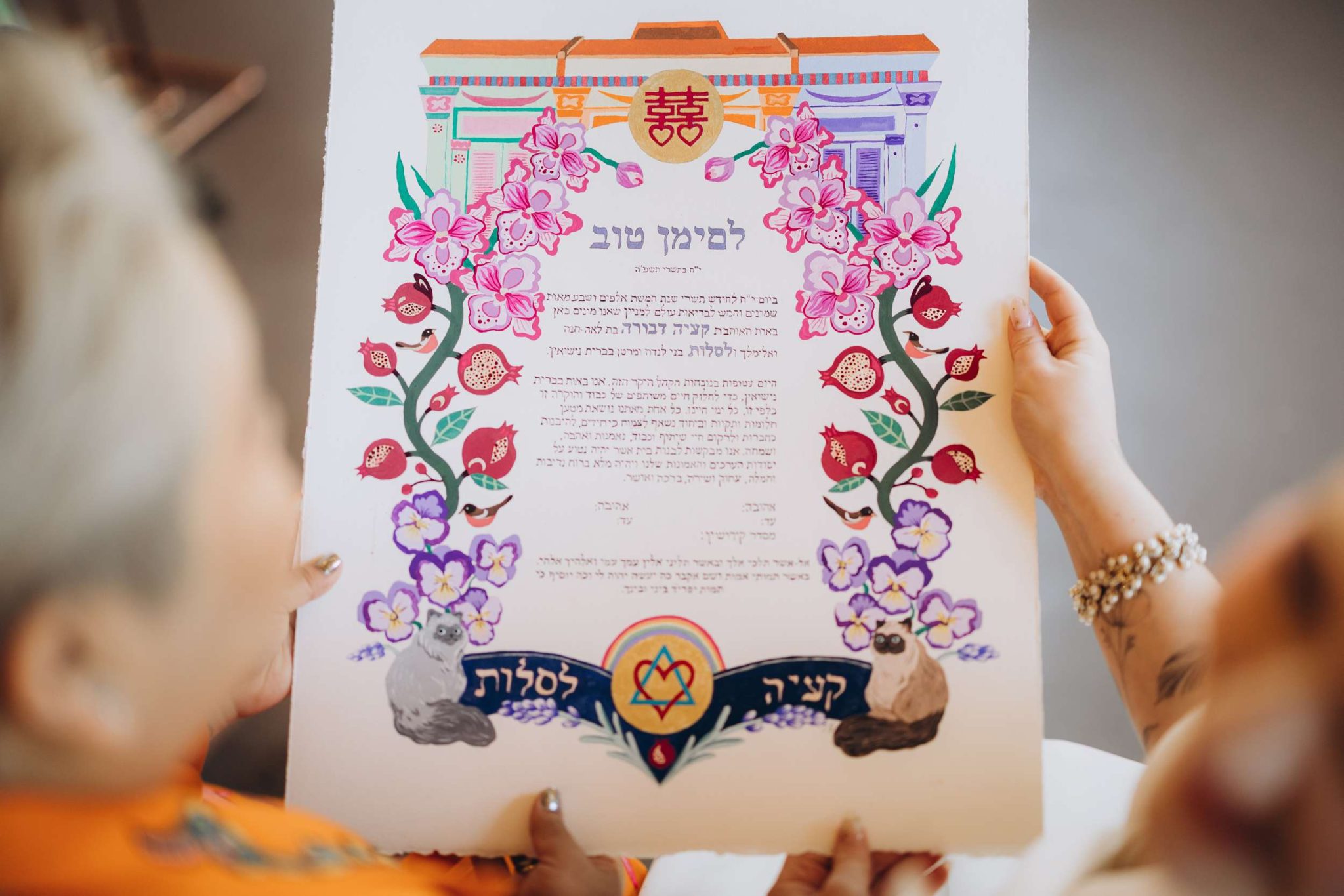
Your Wedding Does Not Need to Pass an Alternative Purity Test
There is no scoring system and you do not lose points for getting married in a church, inviting your extended family or wearing white. You do not earn made up points for upsetting your grandmother.
A wedding becomes personal through the decisions behind it. Those decisions may produce a ceremony filled with centuries-old rituals, followed by tequila shots and a metal band. They may produce an intimate service with traditional vows, no wedding party and a second-hand outfit. They may bring two faiths together or create space for a religious partner and a non-religious one.
Alternative means choosing with intention. It means recognising which customs serve you, which ones require negotiation and which ones you are ready to reject.
So yes, a religious wedding can still be alternative. Faith is part of many people’s identities, including people with tattoos, queer people, punks, goths, feminists, divorced people and anyone else the traditional wedding industry has tried to squeeze into a tidy little box.
So get married somewhere that holds meaning for you.
Wear something that feels like you.
Ask difficult questions.
Keep the rituals you value.
Build the rest of the day around your actual lives.
That sounds pretty rock ‘n’ roll to us.