Every year, in April and October, the world’s largest and most influential bridal fashion event: New York Bridal Fashion Week (NYBFW) takes place. Bridal showcases also take place in London and Barcelona, but New York stands apart for its unmatched ability to shape the trends that will influence the industry for years to come. Even if a 2028 nearlywed never wears a gown that first appeared on the 2026 NYBFW runway, the dress they choose will almost certainly be shaped by the ideas introduced here. As the fashion editor for Rock n Roll Bride, I attended NYBFW in April to track the newest trends and meet as many designers as possible. But I also arrived with a far more pressing question.
NYBFW centres on two major bridal markets: One Fine Day and Mélange de Blanc. Picture vast, high-energy exhibition spaces where each designer hosts a stand, flanked by a small team of models who rotate through looks all day. Buyers, stylists, photographers, and press drift between booths, chat with designers, and watch garments move on real bodies. Outside the bridal markets, independent designers host runway shows, rent out private hotel suites for intimate collection previews, or stage their models and designs in rented-out caviar bars and hotel conservatories. As the designers showcase their collections, the broader wedding community can network and inspire creativity.
Through all of it, one question followed me everywhere: just how inclusive is NYBFW?
Unlike the couture spectacle of regular fashion weeks, where looks are created for celebrities and red carpets, the pieces shown at bridal fashion weeks are intended for real nearlyweds. With over three quarters of the adult population having been married at least once, bridal fashion is one of the most far-reaching sectors in the style world. NYBFW is the place where many of the ideas that will influence those designs are first revealed.
If the collections revealed here guide what nearlyweds wear over the next few years, it seems reasonable to expect the events of the week to reflect the diversity of those who will actually wear the designs. The models on the runway and at the bridal markets should represent a range of bodies, ethnicities, genders and identities. Designers should want to show that their work is for everyone, not only for those who fit a narrow, outdated ideal. Weddings are meant to celebrate love, individuality and belonging, so the industry built around them should be one of the most inclusive spaces on the planet.
Yet this is where the fantasy collapses. Although the wider fashion world has made progress on inclusivity, the bridal industry continues to lag behind in a way that feels almost willful. Many designers still cast young, white, thin, straight and femme-presenting models. And while Gen Z is rewriting the rules of tradition, a surprising number of bridal collections remain firmly rooted in convention. During NYBFW, I searched for designers who champion inclusivity and who create pieces that challenge expectations. I wanted to find the rule-breakers and the visionaries. Instead, I found myself applauding the bare minimum, because the absence of representation was impossible to ignore.
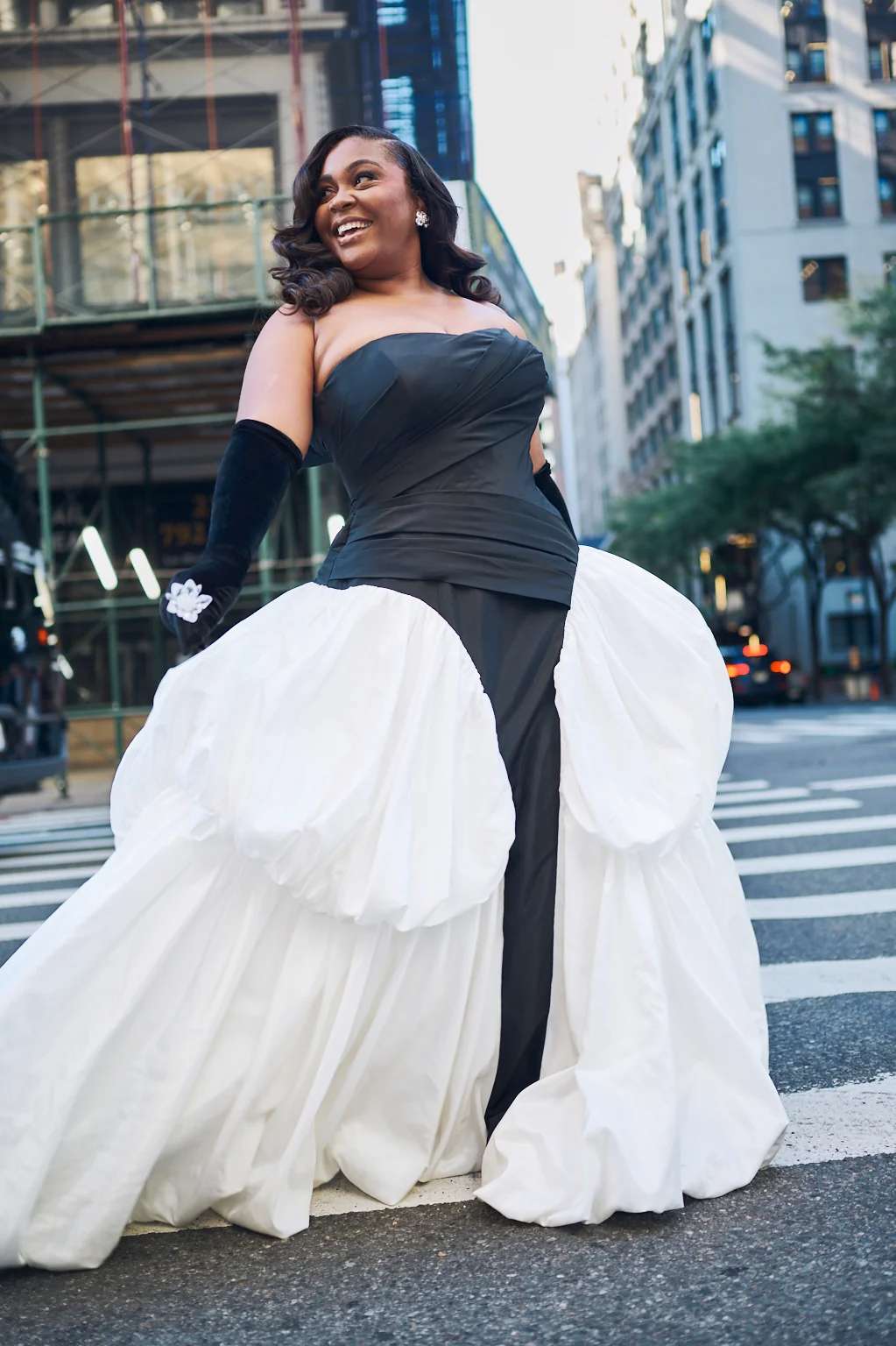
My first event of the week was the One Fine Day bridal market, which featured more than thirty-five global and emerging designers. I spoke with nearly all of them and looked through every collection. When I asked about size ranges, some designers admitted their collections ended at a US size 14 (UK size 18), while others said they went up to a size 28 (UK size 32). Yet out of every brand I visited at One Fine Day, only one booth brought plus-size sample dresses. Yes, only one. Vera Wang was the only designer who thought to bring dresses that the average-sized woman could actually try on.
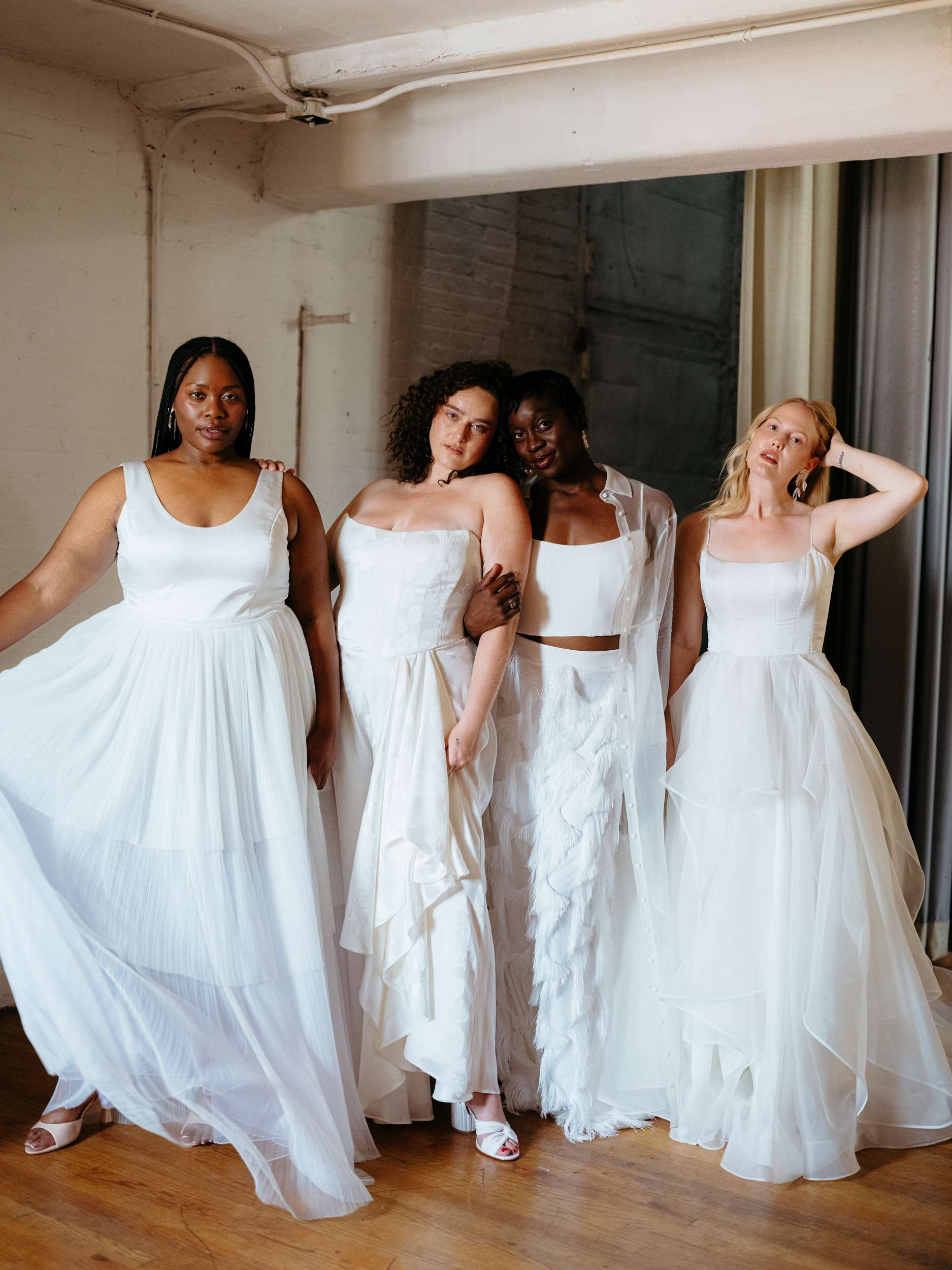
Mélange de Blanc offered a noticeably stronger showing of curve representation, and the designers who made the effort deserve real recognition. ElleNElle Bridal cast two full‑figure models to highlight designs created specifically for curvy bodies, which felt both intentional and refreshing. Loulette Bride and Lara Knight brought plus‑size mannequins to display their curve collections, making it clear even at a glance that curvy nearlyweds were expected and welcomed at their booths. Rebecca Schoneveld continued her long-standing commitment to curve‑friendly design with her latest collection, and Lumiére Bridal impressed me by bringing as many dresses from their new curve collection as from their standard range. It was their first year offering a curve collection, and they told me they created it after realising that simply scaling up their standard designs did not fit their plus‑size nearlyweds properly. They recognised the problem and chose to fix it. Their efforts stood out because they were the exception, not the norm. This made the lack of representation elsewhere feel even more glaring.
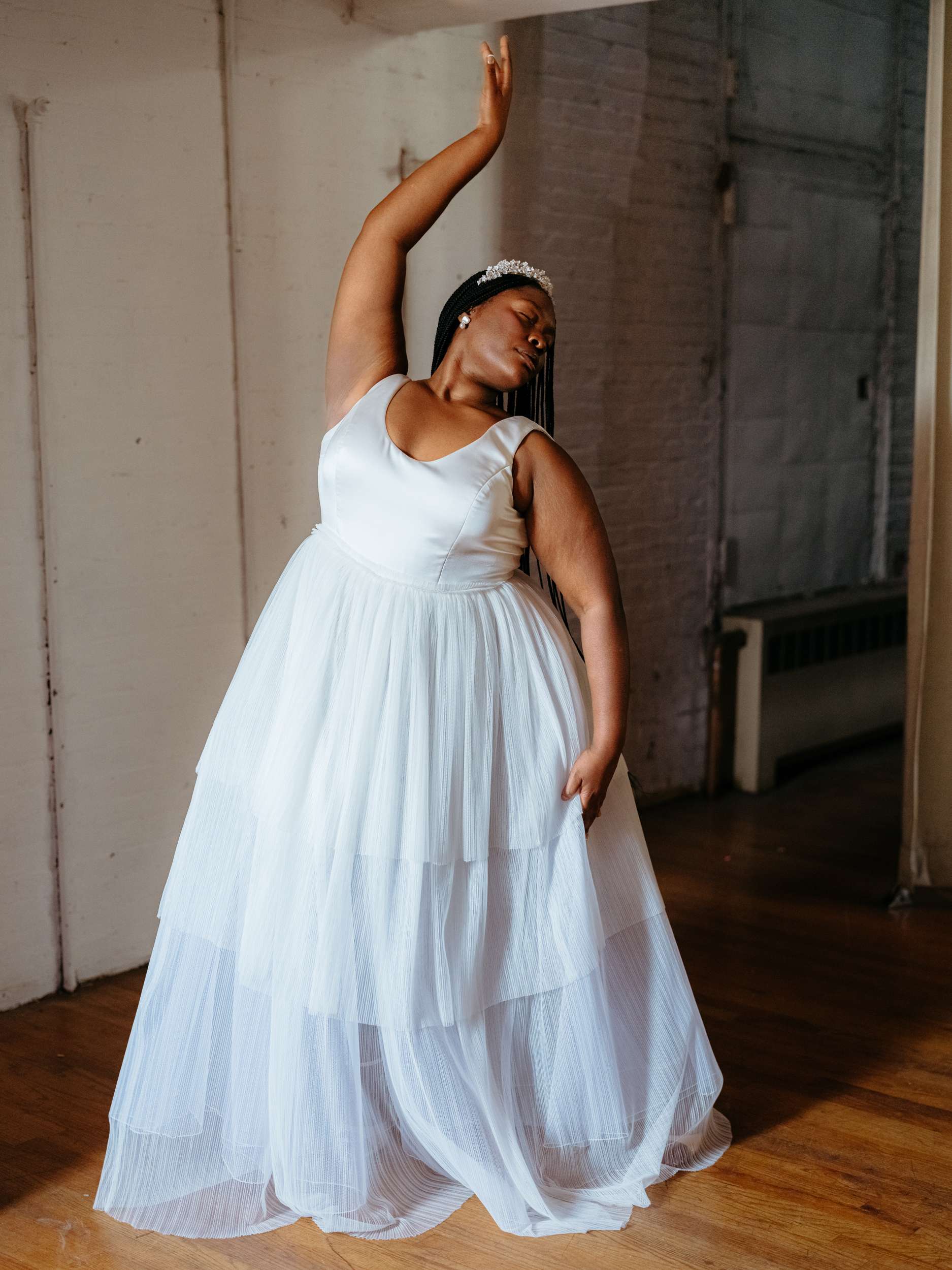
Even well‑meaning designers who want to create curve‑friendly collections face a major barrier. Many told me that bridal shops refuse to purchase plus‑size samples, which makes it difficult for them to justify bringing those sizes to the bridal markets. It is a self‑perpetuating cycle. Designers do not create plus‑size samples because boutiques will not buy them, and boutiques do not buy plus‑size samples because designers do not bring them to market. Everyone blames everyone else, and nearlyweds are left with nothing to try on.
Some designers insisted that although their samples stop at a size 28, they are willing to scale up their designs to create gowns in any size. To me, that feels like a convenient workaround rather than a genuine commitment to inclusivity. It suggests that no time has been spent adapting the design to fit a curvy body. A size 0 dress that has simply been scaled up to a size 30 will never fit as well as a gown that has been thoughtfully designed for a size 30 body from the start. The only way buyers will ever know inclusive options exist is if designers actually bring those curve samples to market.
Attending NYBFW is undeniably expensive for small or emerging designers. Between creating and transporting collections, paying booth fees, hiring models, bringing assistants and simply surviving a week in New York, the financial pressure is real. Even so, choosing to save money by staying size-exclusive is a short‑sighted strategy that will cost brands in the long run. Nearlyweds in 2026 and beyond are rejecting outdated traditions at full speed, and any label that refuses to evolve will find itself fading into irrelevance. The future of bridal is bigger, bolder and far more diverse than the industry seems ready to admit, and the brands that cling to small thinking will soon be the ones left standing alone at the altar.
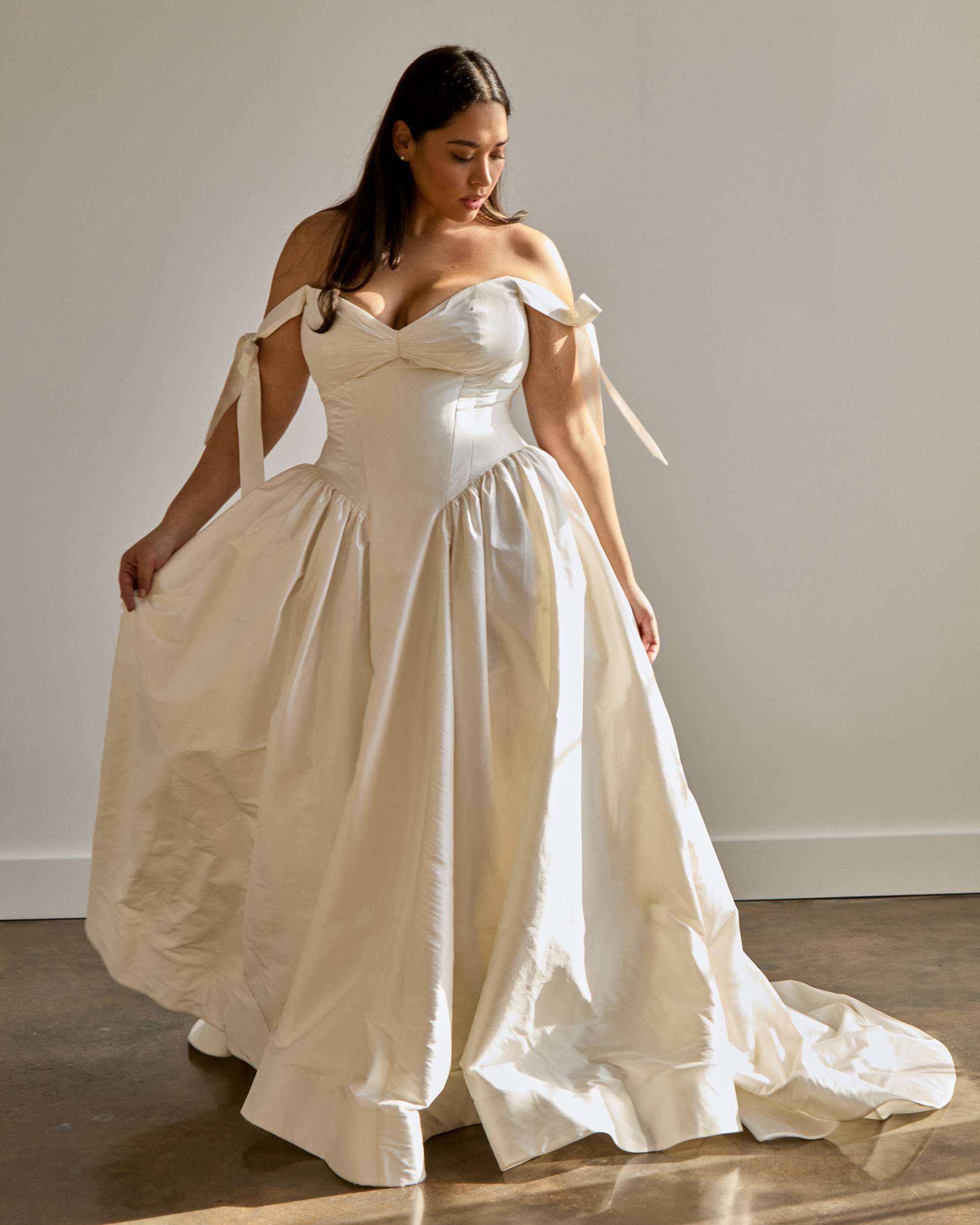
This is why designers and manufacturers must lead the inclusivity charge. They decide which dresses appear on runways, which samples are brought to market and which bodies are invited to wear them. They shape what boutiques stock and, ultimately, which nearlyweds feel seen. Change is possible the moment a brand chooses to prioritise fit, representation and thoughtful design. We need to support the designers who are doing the work and showcasing non‑traditional, forward‑thinking designs, because they are the ones pulling the industry into the future rather than holding it in the past.
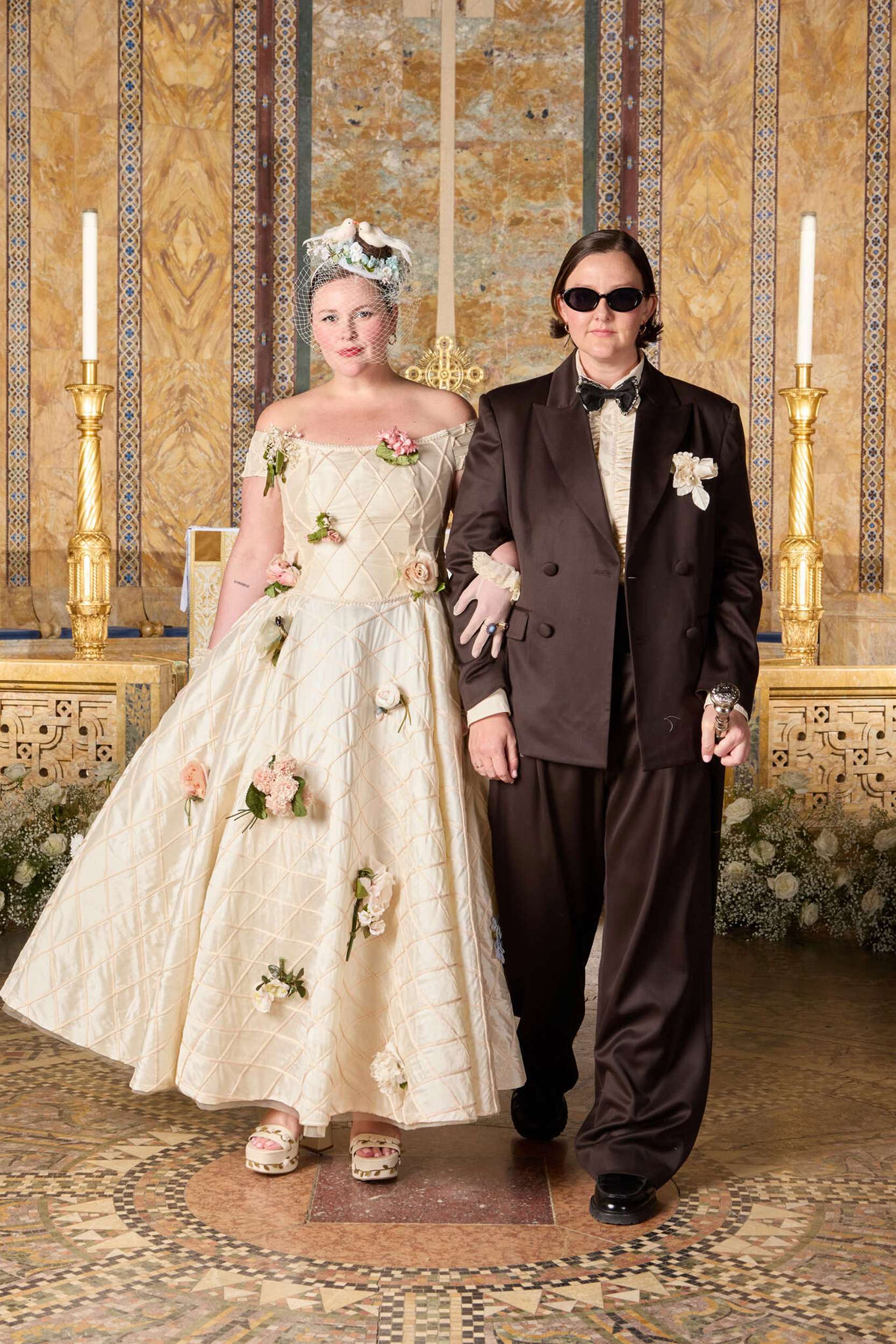
If we were rating designers at NYBFW on a scale of zero to inclusive, Tanner Fletcher would sit at the top without competition. They revealed their vintage-inspired, kitschy collection in a gorgeous church with a theatrical fashion show centred around queerness, ballet, and camp. Two curve models walked the runway, and several other models were members of the LGBTQIA community. Models of all genders wore big bows, ivory dresses, and cupcake-inspired formalwear. They even collaborated with Etsy creators to showcase custom veils, shoes, jewellery and accessories hand-made by small businesses on the runway along with the Tanner Fletcher designs. When I spoke with Fletcher after viewing the collection, he told me he was tired of the bridal industry’s lack of inclusivity, representation, and creativity. He also shared that he never plans to release a white wedding dress because, in his words, “enough already exist.”
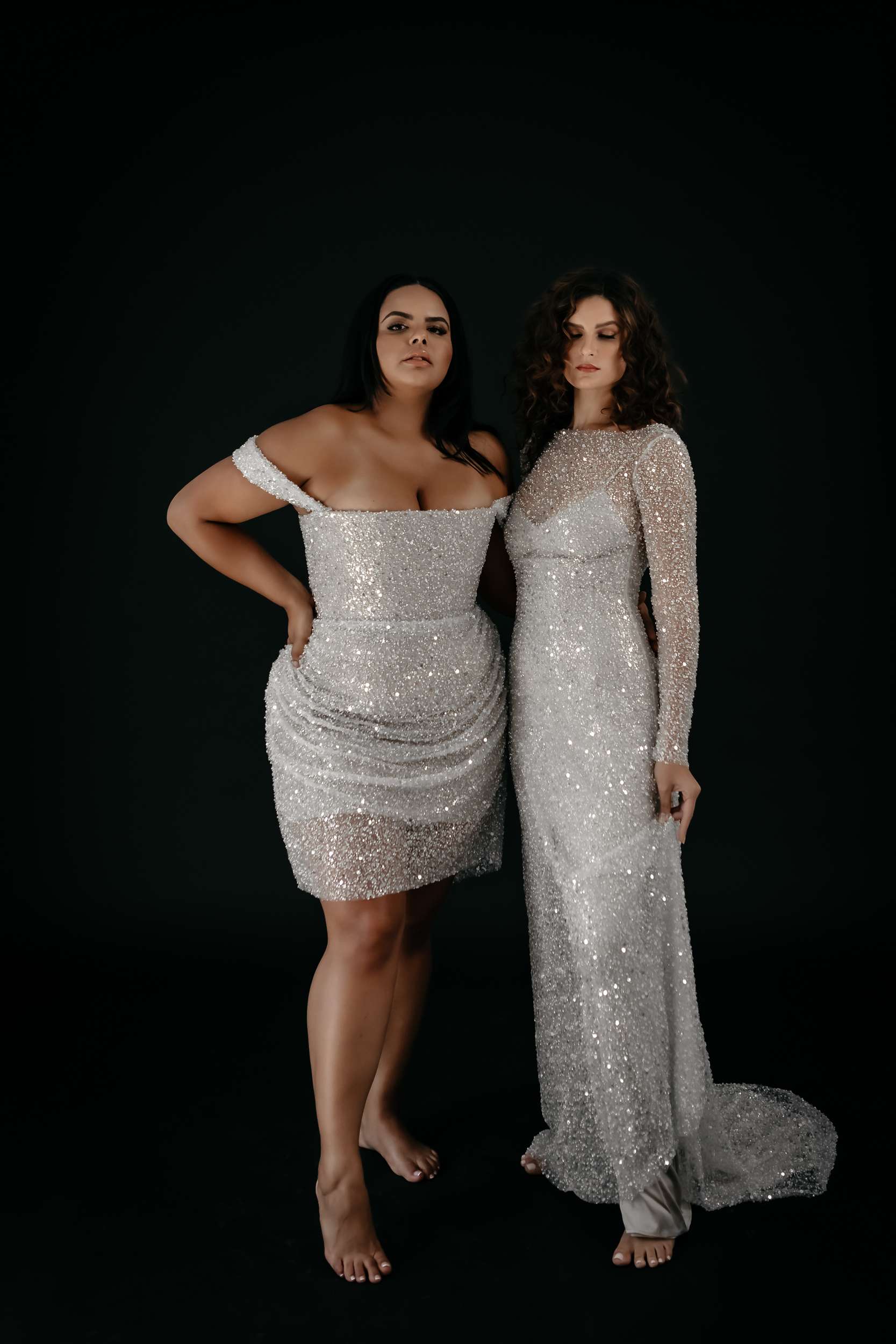
While no other designer approached inclusivity quite like Tanner Fletcher, a handful of others genuinely showed up. Justin Alexander, Jenny Yoo, Alexandra Grecco and Atelier Arielle all used curve models to present their designs on the runway or in intimate previews, and they deserve real credit for that. Seeing luxury gowns on curve bodies felt powerful, and watching a curve model command a runway is always a moment worth celebrating. Ouma also cast an older model, which was refreshing in its own right. Age diversity matters, but it cannot replace size diversity, because it does not require the same level of intentional design work or pattern development. Representation is not a swap-and-go exercise, the designers who made the effort deserve to be recognised for actually moving the needle.
Unfortunately, the list of designers who showed up at NYBFW with genuinely inclusive representation ends there. I wish this article were twelve pages long, it should not be this rare to find designers worth celebrating. I wish I had seen enough inclusivity to lose my voice cheering about it. But the reality is that the industry has a long way to go. Instead, inclusive representation was so rare that I found myself celebrating what should be the bare minimum, such as a single plus-size sample dress on a designer’s rack. When I saw a curve or queer model, I felt a jolt of excitement that should not feel radical in 2026.
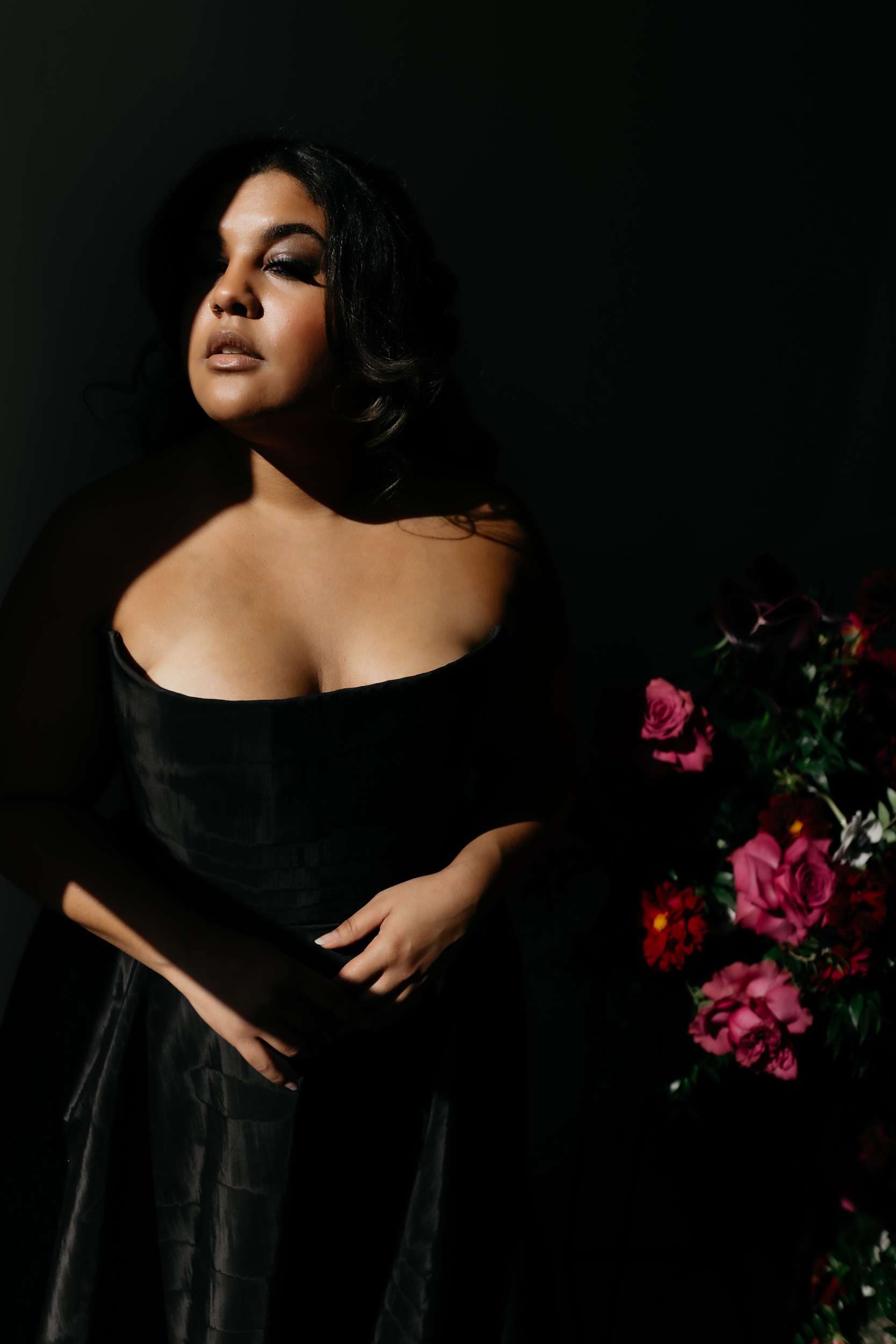
We need to keep demanding better representation in the wedding industry. Designers must show up with inclusive designs. Bridal shops must stock larger sample sizes. And we must amplify the voices of those doing it right, so that remaining traditional and exclusive becomes outdated and embarrassing, rather than expected. The wedding industry, the most pervasive fashion industry in the world, should represent the masses. It is time we start holding it accountable.