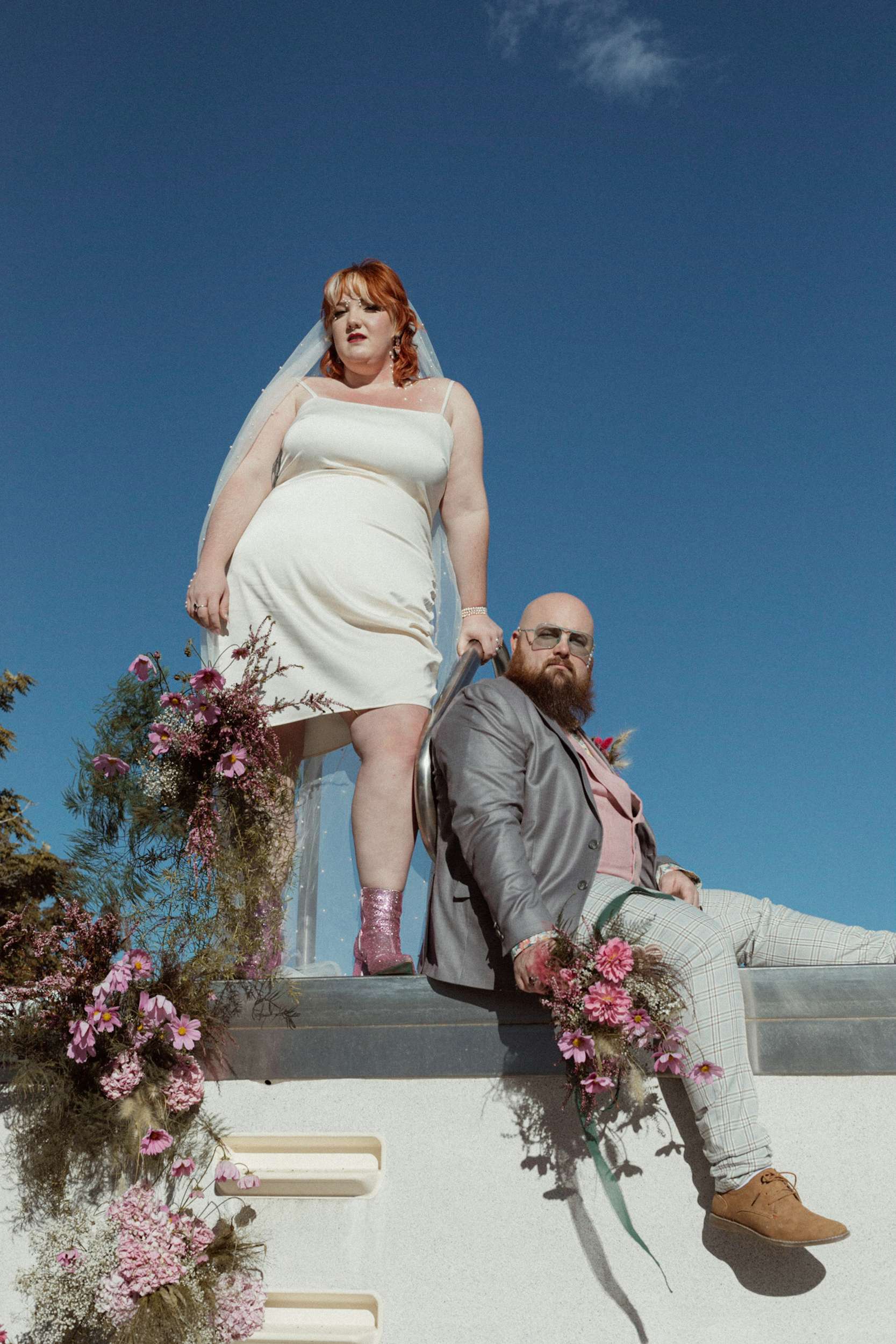
It happens all too often. A person gets engaged, expecting the wedding industry to celebrate their unique love, only to be shocked to realise that they are instead expected to conform to the wedding industry’s outrageous beauty standards and traditions.
As they scroll for wedding inspiration, white dress after white dress fills their screen, followed by ads promising ways to “tone up” or “slim down” before their big day. Casual scrolling serves a steady stream of before-and-after transformations disguised as wedding prep. The wedding industry constantly feeds subtle suggestions that the version of you who got engaged might not be the version of you they expect to see at the altar. Somewhere in the middle of planning a celebration of love, we are quietly given a new assignment: change our bodies before our wedding day.
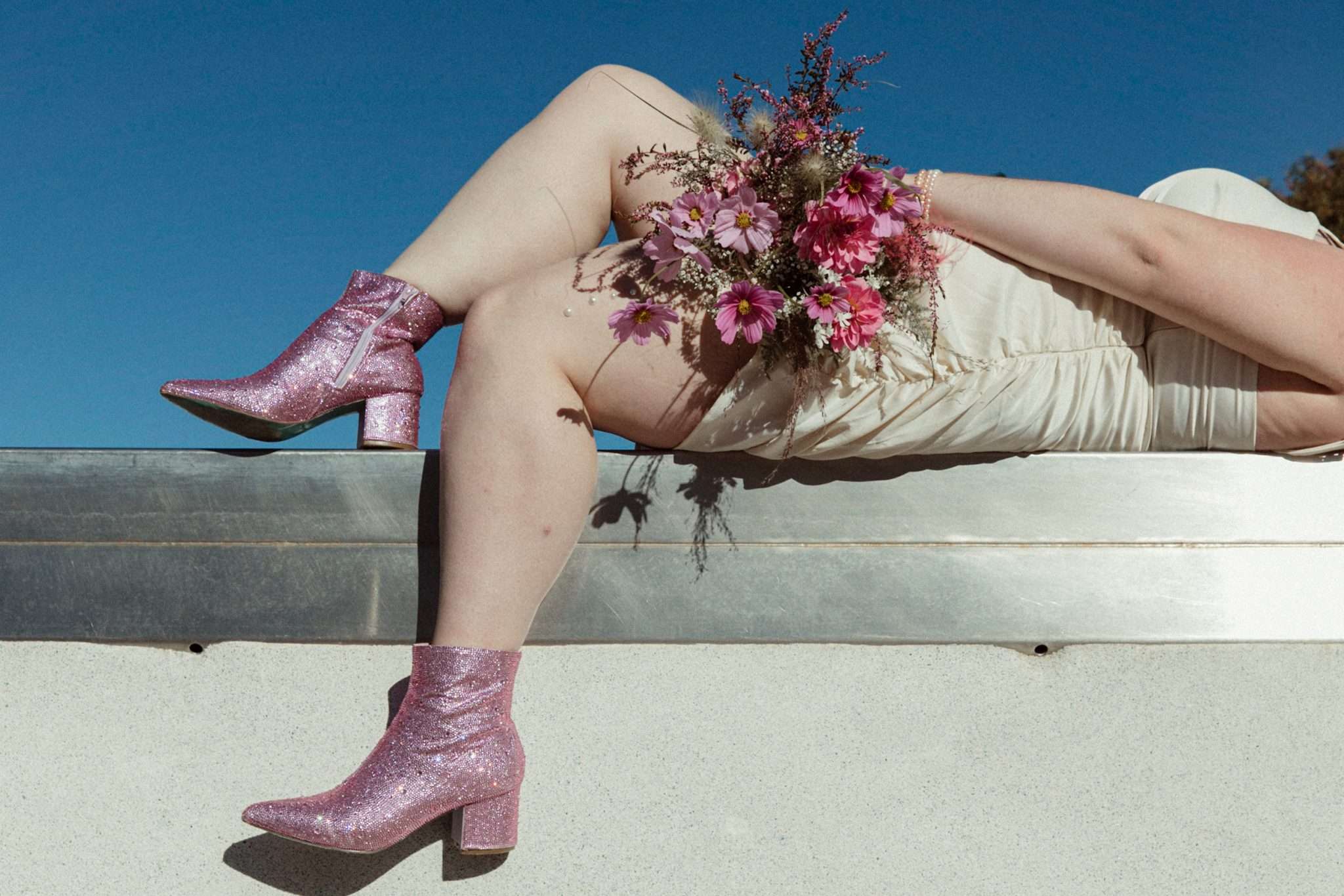
Those inspo-turned-doomscroll body-image spirals are often reinforced during a bridal dress appointment. Many people do not learn until they arrive that wedding dress sizing runs two to three sizes smaller than everyday clothing, and that many shops only carry sample sizes up to a size 14 or 16. But in reality this means a large portion of boutiques can only comfortably accommodate people who wear roughly a UK street size 8 or 10! So many nearlyweds leave these appointments feeling deflated, not because they did anything wrong, but because the system was never designed with their body in mind.
Here is the truth: your partner is not engaged to a future, edited version of you. They asked you, or agreed to marry you, as you are, right now. They have already chosen you. You do not have to change a single thing about yourself to deserve a wedding outfit that feels intentional, confident, and entirely you.
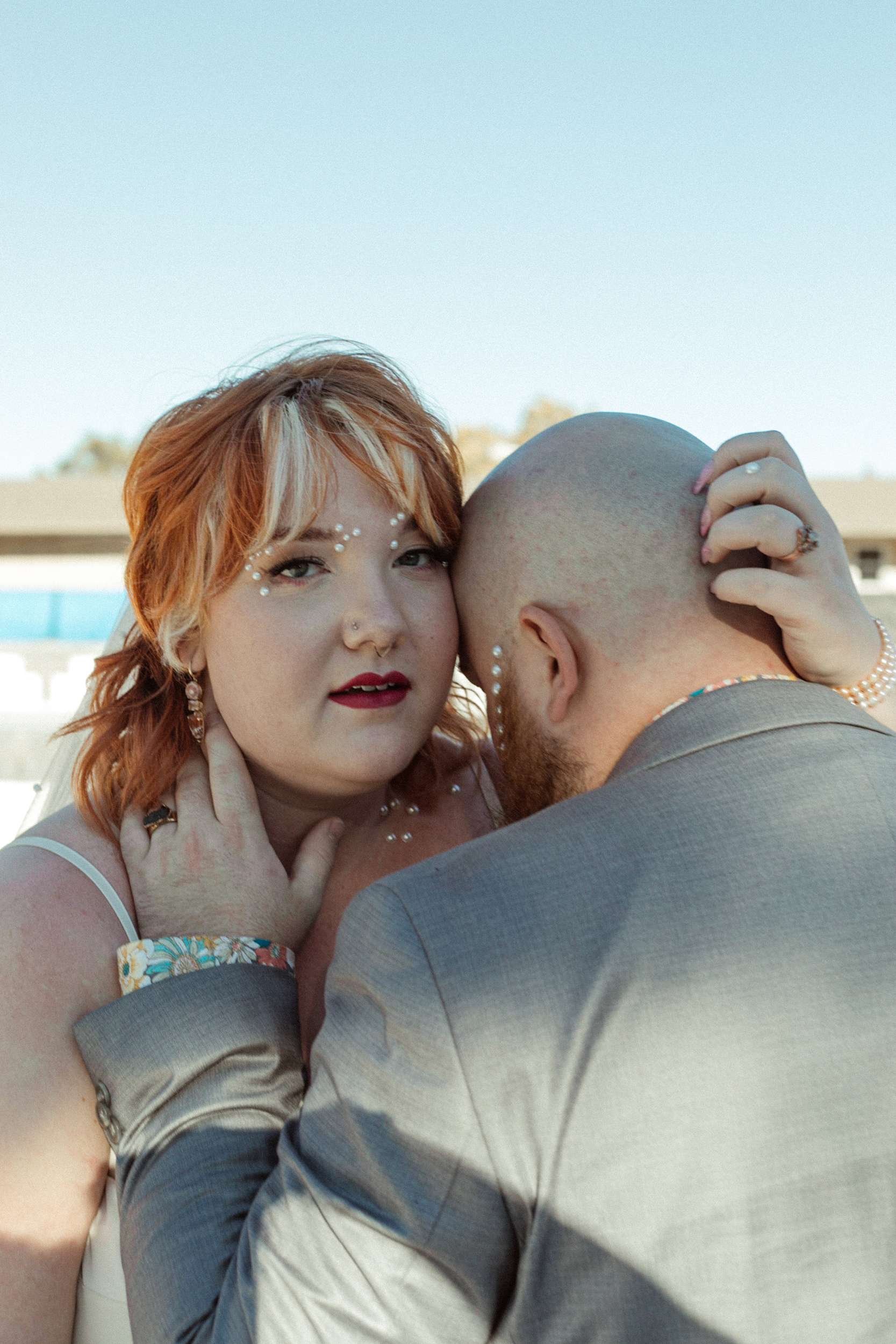
The challenge is not becoming more bridal. The challenge is navigating a wedding fashion industry that profits from convincing people they need to change to fit in. Here are suggestions on ways you can approach wedding fashion without changing a single thing about yourself:
Get Your Outfit Tailored to Your Body
Clothing is meant to fit our bodies. We are not meant to change our bodies to fit into clothing. Whether you are investing in a custom outfit or keeping it more casual, you deserve a wedding outfit that fits you like it was made for you. Nobody cares what the size on the tag of your wedding outfit is. Keep sizing up or down until your look fits you correctly at the part of your body that is the most challenging to fit. Your tailor can then nip and tuck where necessary.
Alterations can also adjust sleeve fit, add bust and hip shaping, modify length, ensure comfort when sitting or dancing, and can enhance overall structure. A skilled tailor can add fabric, boning, padding, or structure to emphasize the parts of your body you love and support the areas you want to feel more secure. A cheaper outfit option can look expensive if it fits well, and alterations for non-wedding dresses often cost less than you might expect. Tailoring is one of the most powerful tools for feeling confident and comfortable on your wedding day. When your outfit fits properly, you stop thinking about how your body looks and start thinking about how good you feel.
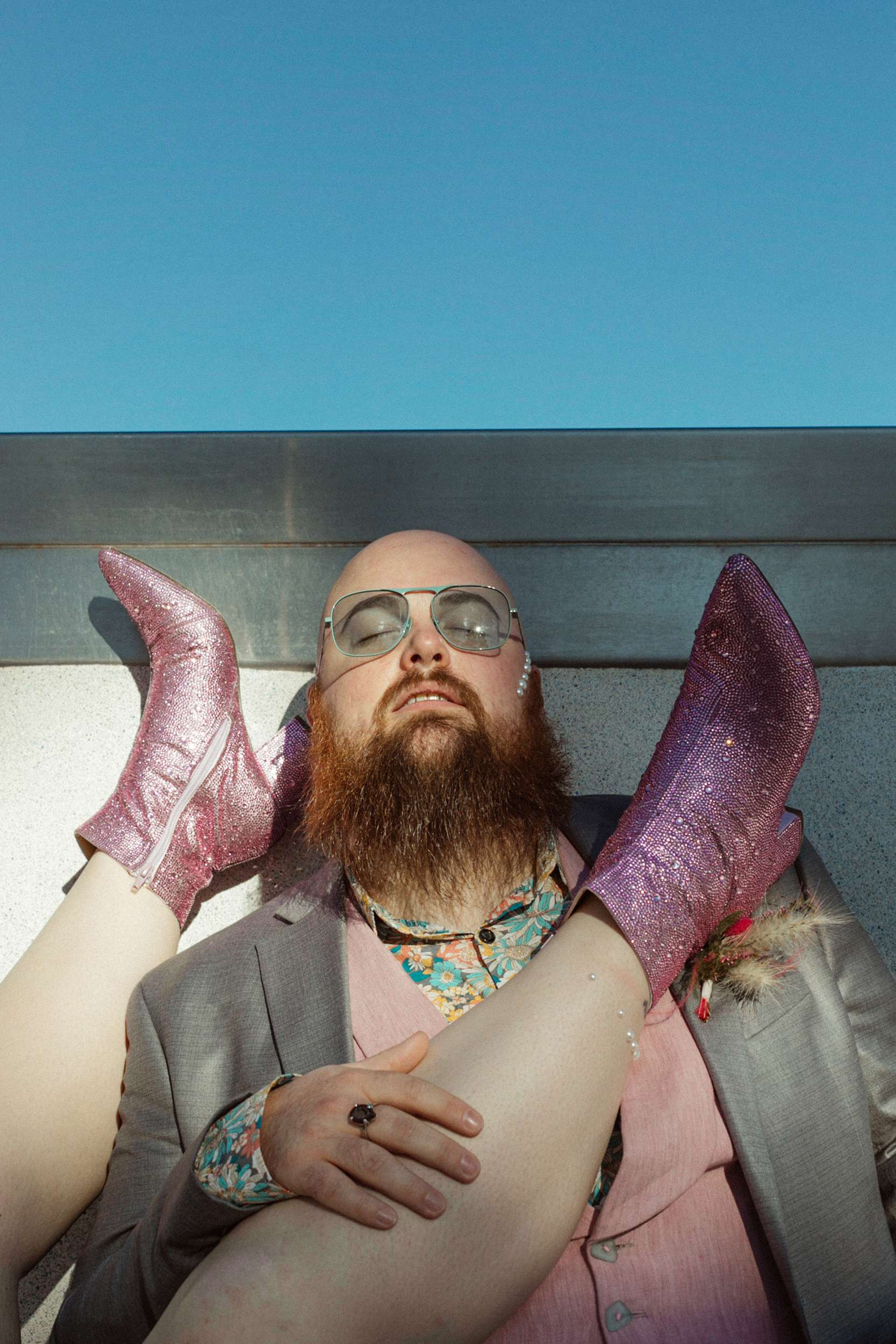
Use a Tailor to Make Your Off-the-Rack Purchase Feel More Like You
The fit of a garment is not the only factor in determining whether your wedding look is finished. Your outfit should reflect your individuality, not just your measurements. Don’t be afraid to get creative to make your look feel more you.
Add sleeves. Remove sleeves. Raise a neckline or lower it. Add or remove slits, swap out buttons to match your color scheme and personality, or add trim, lace, or bows. Incorporate heirloom jewellery, embroidery, or other personal touches. Use accessories like brooches, florals, and pins to personalise your look. Bedazzle your tie, add charms, patches, or grommets to your jacket. Don’t forget about all the personality you can convey through socks, cuff links, tie bars, lapel pins, watches, or clothing linings.
These adjustments do not have to be dramatic or expensive. They just need to be intentional. Small customisations can transform a garment from clothing you found at a shop into your unique wedding look. Many alteration specialists can handle these customisations alongside standard tailoring. For fun, creative wedding accessories I love Madison Chamberlain, Percacciolo Collection, Amber Rose Bridal, Empressive Headwear, Guajardo Studio (guajardostudio.com) and Cosmic Collective. Etsy is also a great place to discover newer designers.
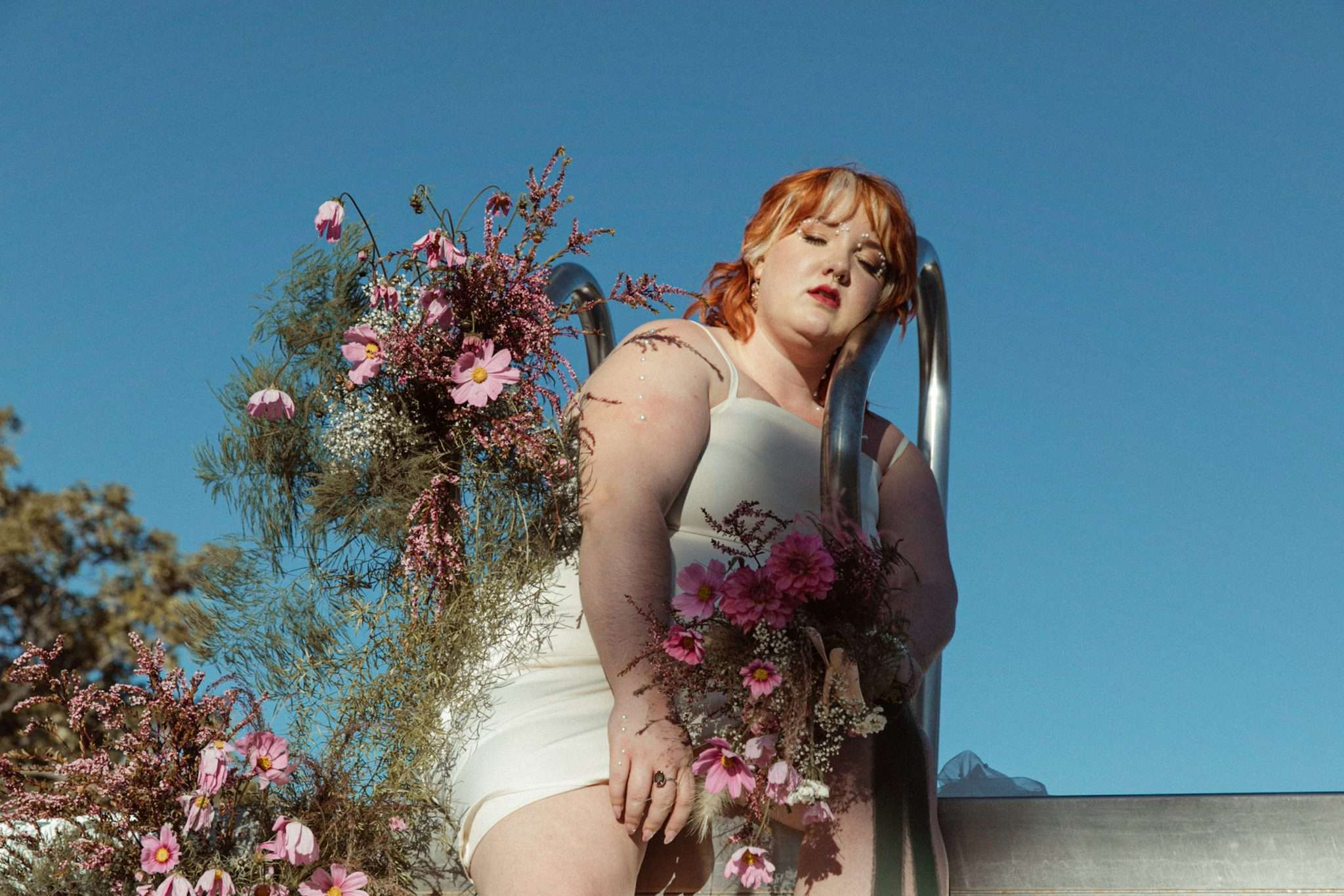
Do Your Homework
Not every bridal boutique or formalwear shop is created equal, and walking into a space that does not carry your size can do real damage to your confidence. If you know your size, call ahead and ask what sample sizes they carry. Ask if they regularly work with plus-size clients, gender diverse clients, or clients like you. You deserve to try things on without being squeezed, clipped, or made to feel like an inconvenience. A good shop will treat your body as normal, not as a problem to solve. Preparing ahead of time can help prevent unnecessary body image harm and ensure your try-on experience feels affirming instead of alienating.
There are so many great, inclusive bridal shops and designers, many of them featured throughout the pages of this magazine! Be sure to look through the ads and supplier’s credited at the bottom of the real wedding features for some suggestions.
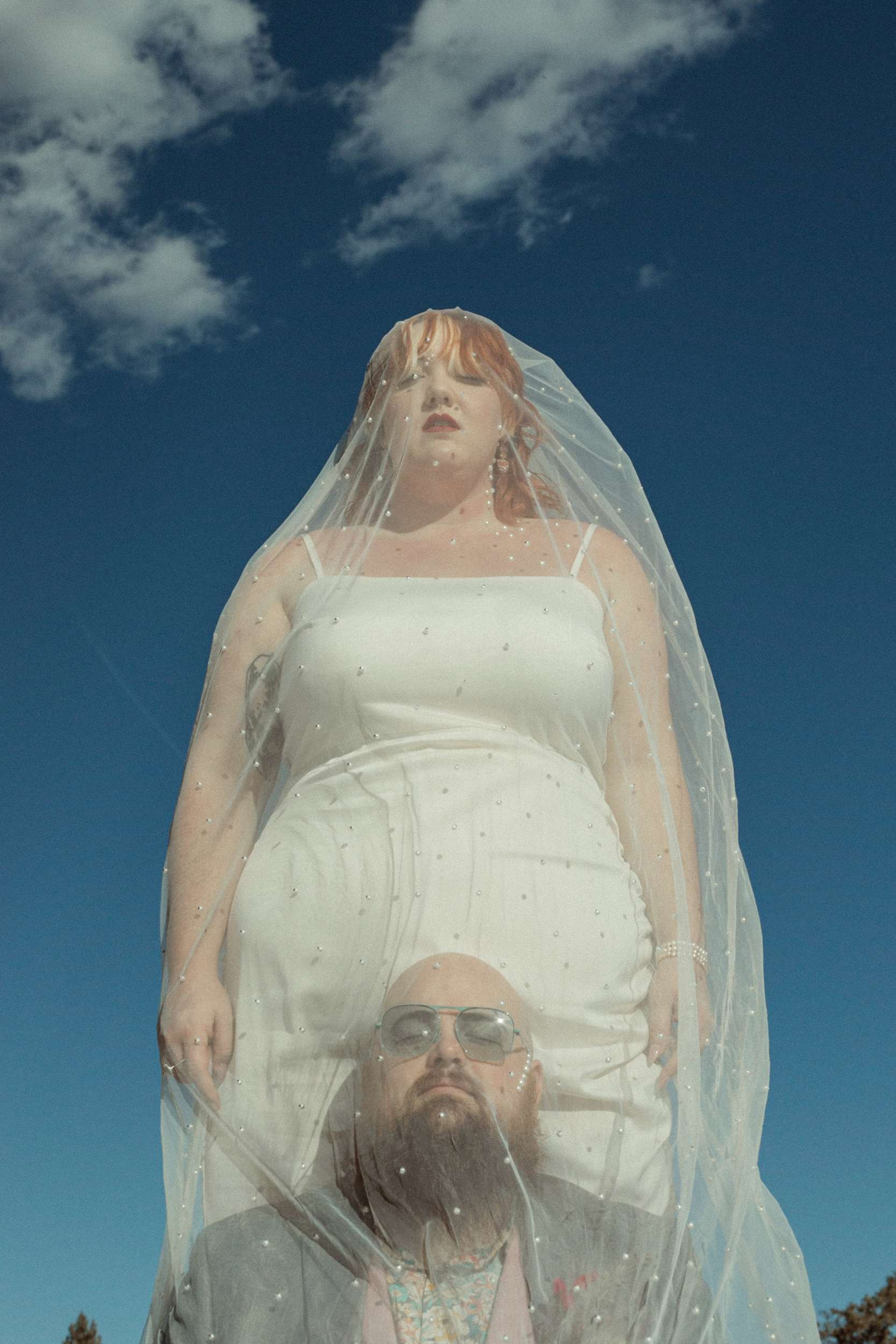
You Don’t Have to Wear Wedding Clothing
Or white. You don’t even have to wear a dress or a suit, or shop from bridal collections or wedding-focused brands. You do not have to follow any suggestion simply because it has been repeated enough times to feel like a requirement. If you are the one getting married, whatever you wear that day is your wedding outfit. There are certain fabrics and textures that can feel traditionally bridal, like white dresses, dainty lace, veils and headpieces, gloves, and statement jewellery, but none are required for your wedding look to be valid.
Your presence at your wedding, wearing what makes you feel like your most confident, authentic self, is what makes the outfit bridal. You do not need to prove that you are the one getting married through your clothing. Some inclusive fashion labels that translate well into bridal looks are Unique Vintage, Eloquii, Haus Dahlia, Selkie, Dressed in LaLa and Ofuure.
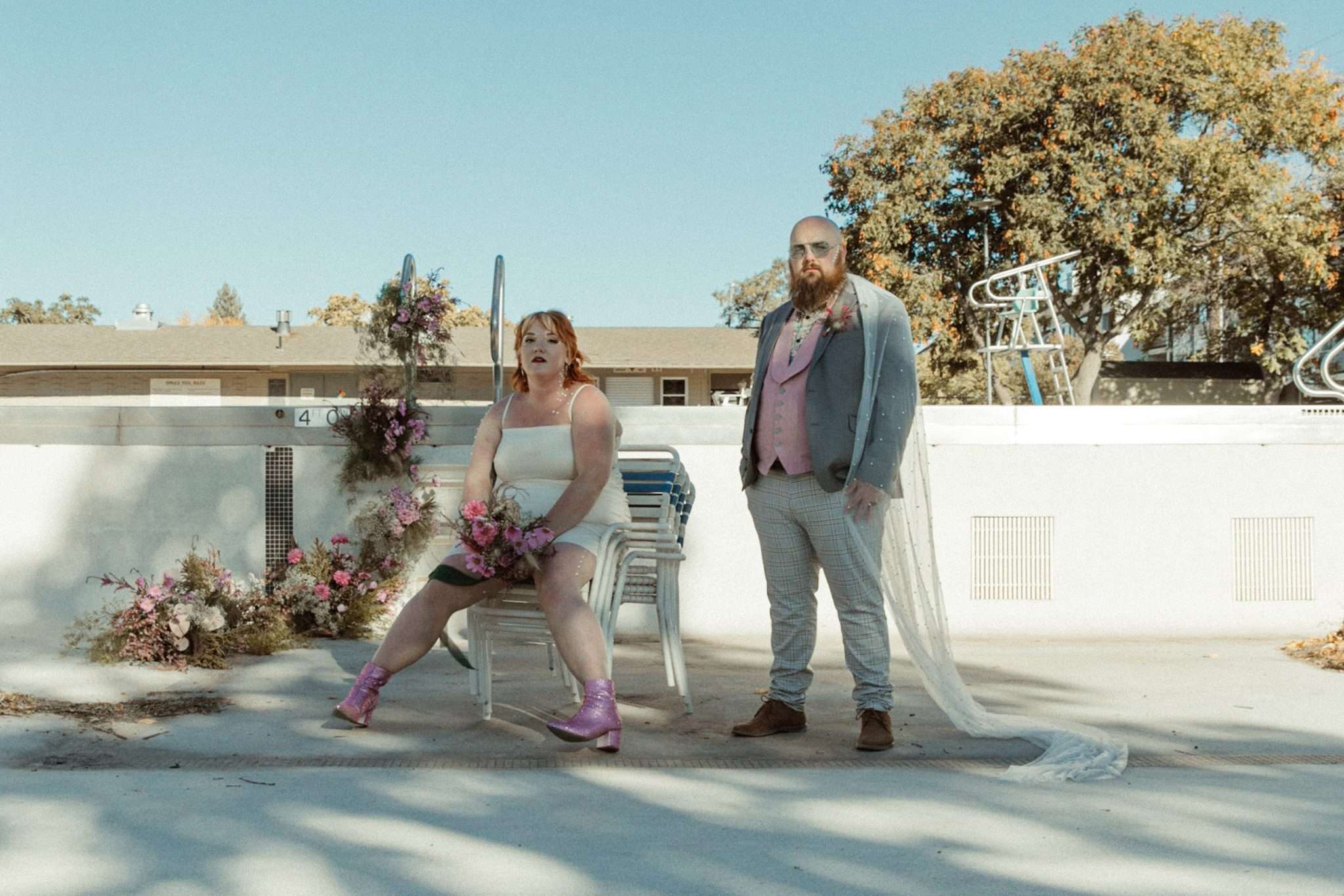
Wedding fashion should be an expansion of who you are, not a negotiation with tradition. The most powerful looks are not the ones that follow tradition most closely, but the ones that feel honest and most like you. Trends will change, silhouettes will cycle in and out, and the industry will keep trying to sell you a “better” version of yourself. But the version of you reading this is already the right one. Choose wedding clothing that fits your body, reflects your identity, and supports your comfort.
Suppliers
- Photography: From the Daisies
- Styling: Styled to Filth
- Hair & Make-Up: Ashlyn Kay Artistry
- Flowers: Flower Disco