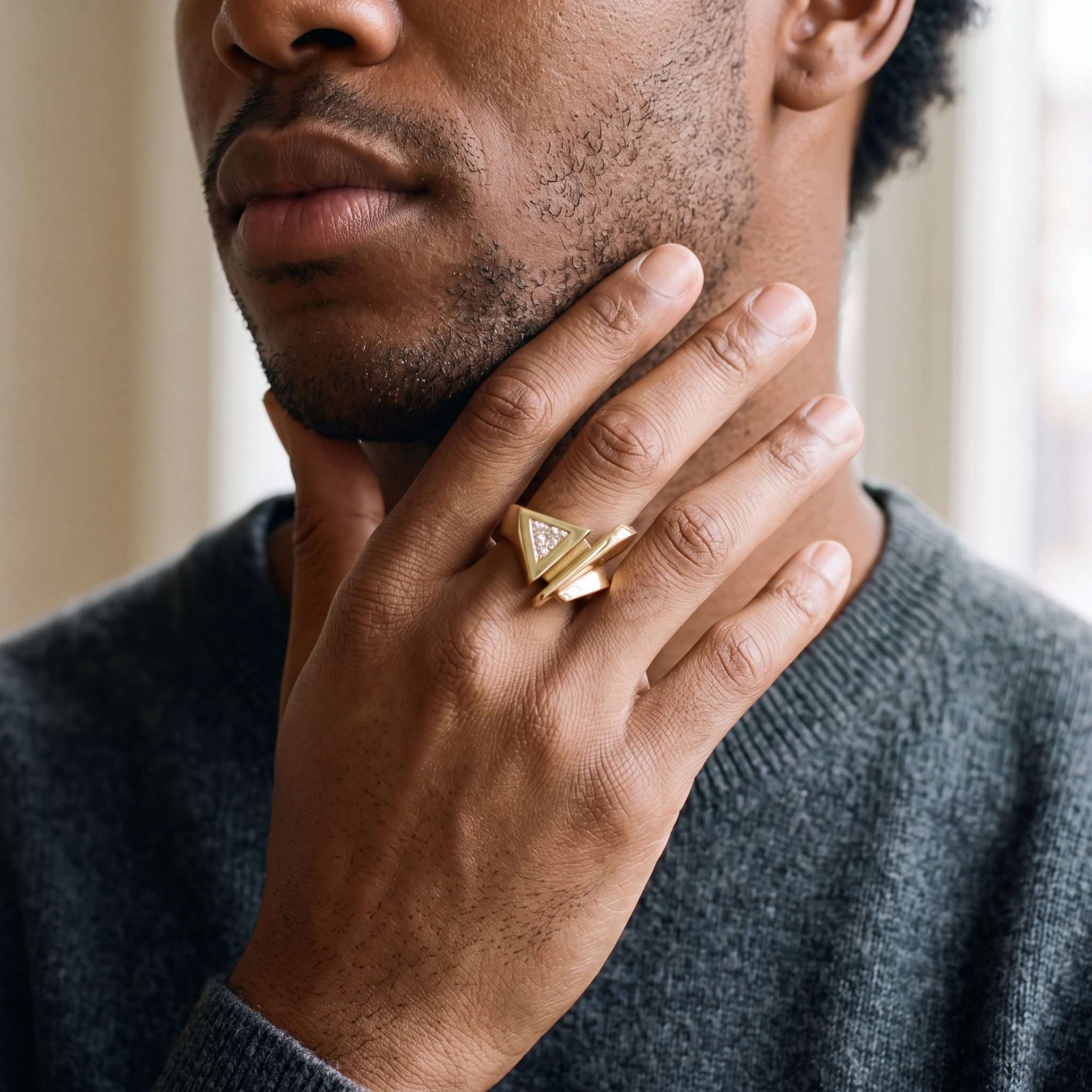
You’ve asked AI to design your engagement ring. A few prompts later, you’re looking at your dream ring with a sculptural setting, an unusual arrangement of diamonds and the exact mix of influences you’ve struggled to find in a shop.
You contact a jeweller, who zooms in and immediately realises what you’ve mocked up is actually not impossible to make in the real world! Maybe there’s nothing holding that diamond in place, maybe the stone is so massive it would cost £100k alone, or maybe the band is too delicate or intricate and wouldn’t be practical to wear everyday.
There’s no denying that couples are using AI to mock up lots of their wedding ideas, from ceremony backdrops to their outfits. But the fantasy ideas have to match up to reality to actually get off the screen and into your actual wedding. A convincing AI generated image can disguise some fairly fundamental problems.
How one jeweller is embracing AI design
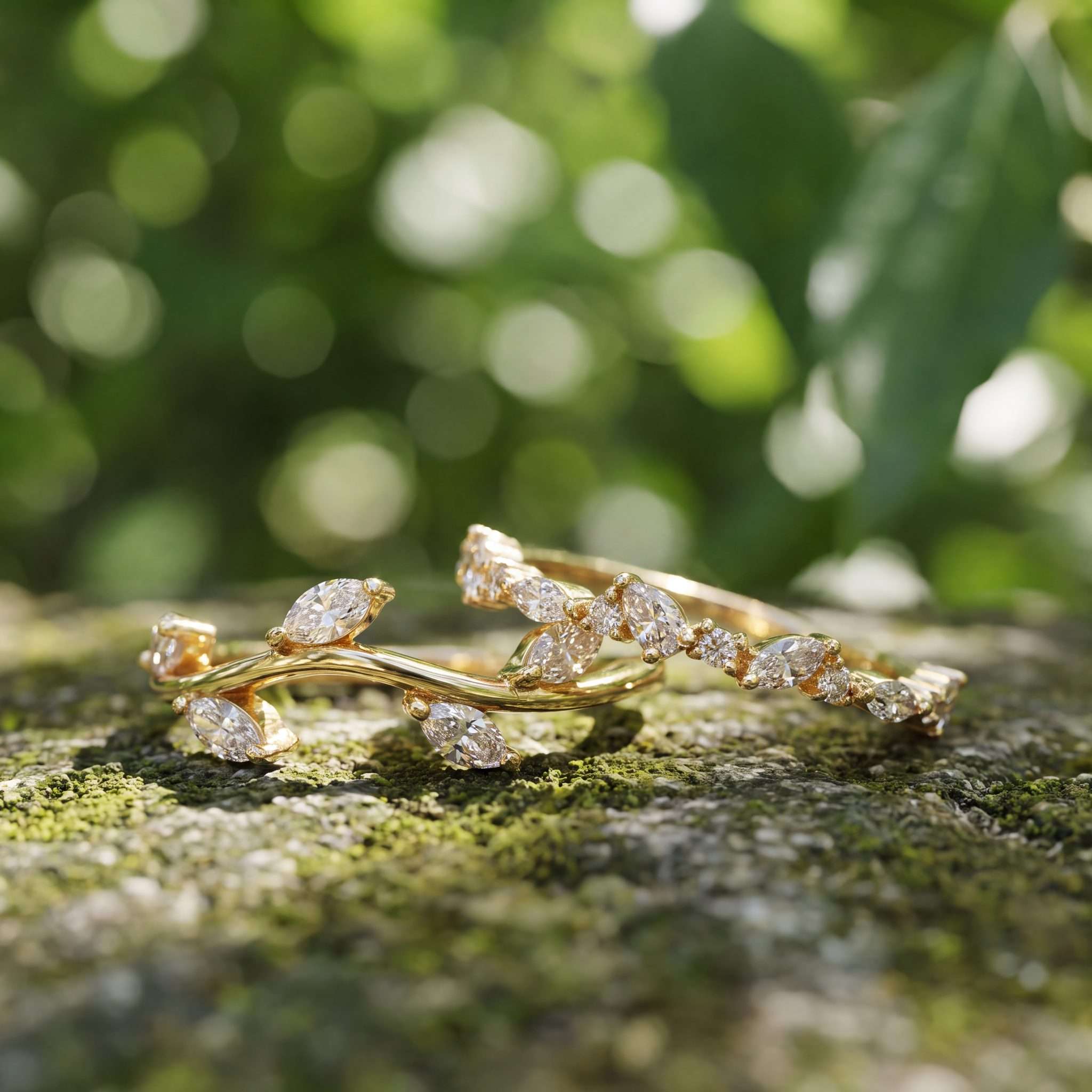
At Christopher Fine Diamonds in Chandler, Arizona, customers started arriving with AI-generated rings they wanted to commission. But instead of fighting it, they wanted to use AI in a way that would help, not hinder, the design process.
When Chris Uptain founded his company in 2003, he would sketch customers’ ideas on paper, sometimes even just on a napkin, before carving designs by hand in wax. Introducing computer-aided design, or CAD, allowed the team to build precise three-dimensional models and produce physical wax models for approval. But customers still had to describe an idea, wait for an interpretation and explain what they wanted changing.
Then, in 2024, the business introduced an in-person interactive CAD design experience. Customers could sit directly with a designer and watch their custom engagement ring design develop in three dimensions, discussing adjustments as they happened.
“Today, we have approximately 50 to 60 customers visiting our Chandler showroom every month specifically for this design experience”, Chris told us. “Over our 23 years in business, we’ve created more than 15,000 custom jewellery designs, and we’ve never been busier. For a while, I really thought we had solved one of the biggest challenges in custom jewellery design.”
Then along came artificial intelligence.
Now, Chris and his team actually use their own AI concepts as part of the design and engineering process.
AI should only be a starting point
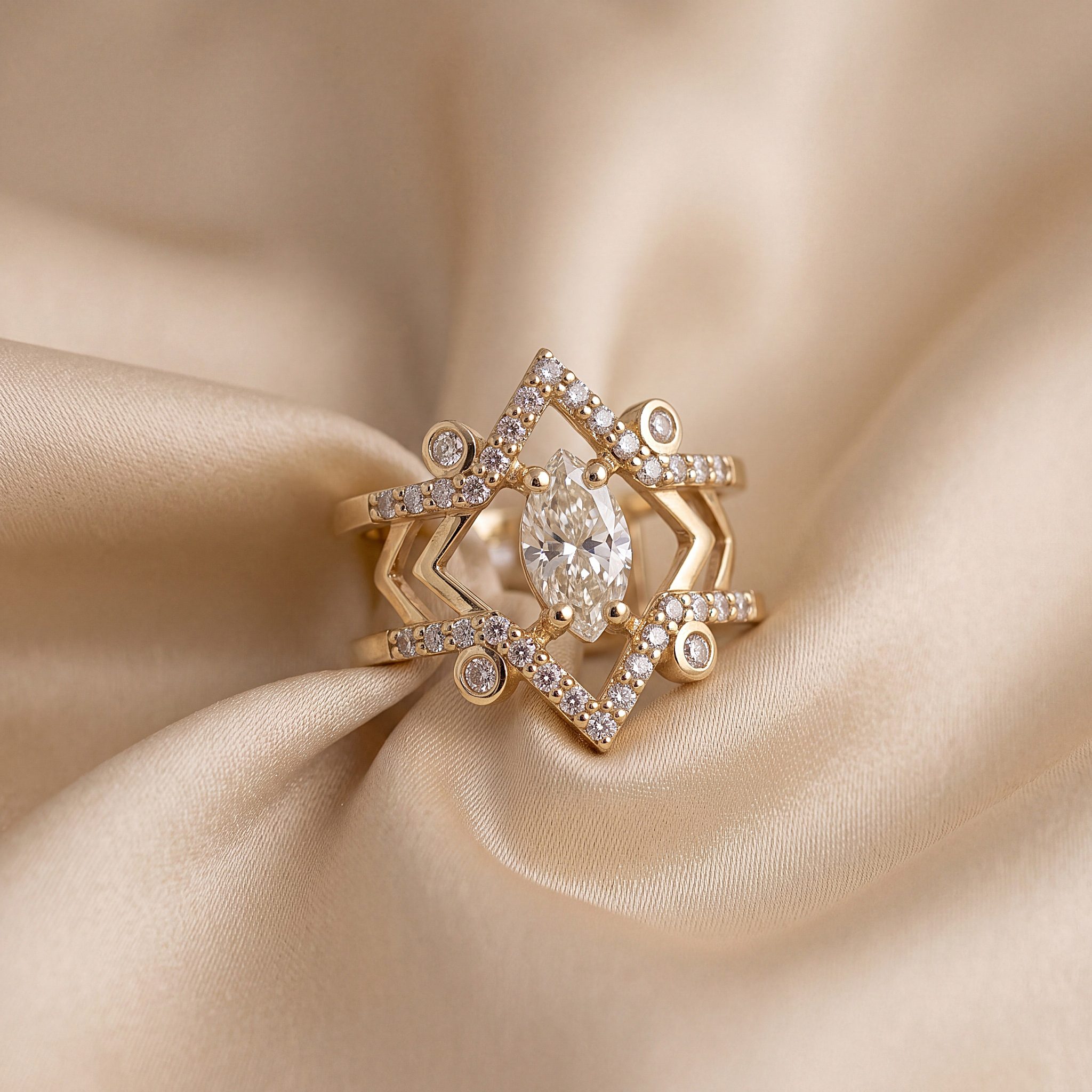
An AI image captures one angle at one moment but your engagement ring will spend its life on a moving hand. That makes everyday wear part of the design brief. A setting can look spectacular on a screen while containing elements that are vulnerable once you start wearing it.
Their advice? Only use AI as a starting point. Talk to your jeweller about how you expect to use the ring. Do you want to wear it daily? What does your routine involve? How much care are you prepared to give it? Ask which details the jeweller considers fragile and why. Get them to explain the implications of the setting height, proportions and finer elements in your proposed design.
You can then make decisions with a clearer sense of what owning the finished piece will involve. That’s especially useful when your reference image presents every elaborate flourish as equally achievable.
“I have to admit, some of these AI designs people come up with are spectacular”, Chris says. “People are creating things that don’t look like anything you’d ever find in a traditional jewellery store. Intricate vintage-inspired settings, wildly imaginative diamond arrangements, unusual combinations of shapes and metals, and designs that look more like tiny works of art than engagement rings. For someone who has never felt drawn to traditional engagement rings, this technology can be incredibly liberating. Except there’s one rather significant problem. Just because AI can draw something doesn’t mean we can actually make it.”
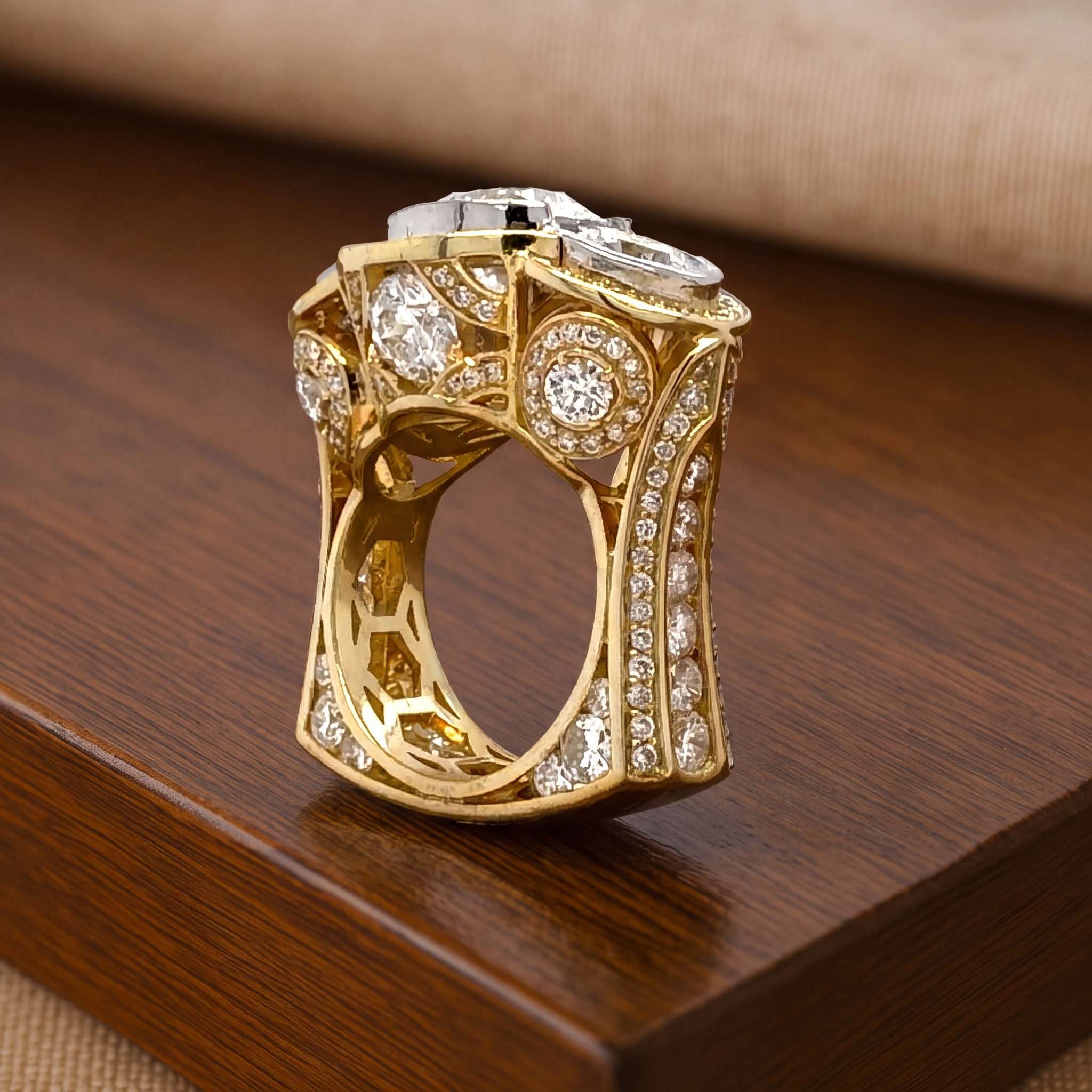
Being open to changes makes all the difference
Communicating a ring idea has challenged jewellers for much longer than AI has existed. Whether you’re explaining your ideas with words, a sketch or AI, not every idea will be possible.
And this is exactly what underpins Chris’ newest venture, Diamond Consulate, an appointment-only Oklahoma City studio scheduled to launch in November 2026.
“Diamond Consulate is a hybrid from our first model, in that we are exclusively an appointment-only studio. We offer the experience above full in-person CAD design in a locked studio with no distractions.”
So is AI all bad for the jewellery industry? Chris doesn’t think so. “I don’t think AI is a bad thing for our industry. Quite the opposite, actually. I think it’s going to encourage more people to imagine engagement rings that are completely different from anything they’ve seen before. But perhaps the most surprising thing we’ve learned is that the more advanced the technology becomes, the more we appreciate the importance of the person behind the design. Because ultimately, an engagement ring isn’t just a beautiful object; it’s a piece of someone’s story. It should reflect who they are, what they love, and what makes their relationship unique. And after 23 years of making them, we still believe the best way to create something that personal is for two people to sit down together, share ideas, and bring something extraordinary to life. Even if the process no longer starts with a napkin.”