By now you’ve probably already heard the story about how and why diamonds became the go-to stone for engagement rings. But just in case you haven’t, the answer is marketing! Before the mid-20th century, diamond engagement rings were not the universal tradition they are today. In fact, many people proposed with other gemstones or family heirlooms.
The shift happened largely thanks to a hugely successful advertising campaign in 1947. The diamond company De Beers launched the now famous slogan “A Diamond Is Forever” which positioned diamonds as the ultimate symbol of lasting love and encouraged the idea that an engagement ring should always feature a diamond. The message spread quickly through magazines, Hollywood films, and celebrity culture, until the diamond ring became firmly embedded as the “normal” choice. Wild, right?
But tradition created by advertising is still just tradition. And today, many couples are choosing something different. So, if diamonds don’t feel like you, there are plenty of beautiful alternatives for you to consider.
Moissanite
Moissanite has become one of the most well known alternatives to diamonds. Originally discovered in a meteor crater, moissanite is now created in laboratories and is valued for its brilliance and durability. It has a refractive quality that produces a lot of sparkle, sometimes even more than a diamond, which makes it appealing for couples who still want that classic engagement ring look but with a different stone.
On the Mohs hardness scale, which measures scratch resistance, moissanite ranks at 9.25. Diamonds sit at 10, making them the hardest natural material, but moissanite comes very close. This makes it an excellent choice for a ring that will be worn daily.
Another factor drawing couples to moissanite is cost. Stones of the same size are typically far more affordable than diamonds, allowing people to choose a larger centre stone without dramatically increasing the price.
Sapphires
Sapphires have been used in engagement rings for centuries and remain one of the most durable gemstones available.
They are also available in so many colours! Most people associate sapphires with deep blue stones, but they actually come in pink, yellow, teal and even white. This versatility makes them appealing for couples who want something more colourful.
With a hardness rating of 9 on the Mohs scale, sapphires are strong enough for everyday wear and are considered one of the safest choices for engagement rings after diamonds and moissanite.
Emeralds
Emeralds are often chosen for their rich green colour and vintage feel. They have a long history in jewellery and can create a striking engagement ring, especially in antique or art deco inspired settings. Emeralds also tend to contain natural inclusions. These internal characteristics are part of what gives emeralds their distinctive appearance, but they can make the stone more delicate.
Emeralds are softer than sapphires and diamonds, usually ranking around 7.5 to 8 on the Mohs scale. For that reason, emerald engagement rings often benefit from protective settings, such as a bezel or halo design, and may require more careful wear than harder stones.
Salt and Pepper Diamonds
For couples who like the idea of a diamond but want something less traditional, salt and pepper diamonds offer a completely different aesthetic. These stones contain visible inclusions that create speckled, cloudy or smoky patterns within the diamond. Rather than being treated as imperfections, these inclusions become part of the design.
Because they are still diamonds, salt and pepper stones retain the durability that makes diamonds so popular for engagement rings. At the same time, their unique appearance gives each ring a very different character. No two stones look exactly the same.
Morganite
Morganite has grown in popularity thanks to its soft pink tones and romantic appearance. Often paired with rose gold settings, it creates a warm, delicate colour palette. Morganite is also typically more affordable than diamonds, which can make larger stones more accessible.
However, morganite sits lower on the Mohs hardness scale at around 7.5 to 8. While still suitable for jewellery, it may show wear more quickly than harder stones if worn every day over many years.
Lab Grown Diamonds
Another extremely popular choice for couples who like the look of diamonds but not the ethics or the cost. Lab grown diamonds are chemically and physically identical to mined diamonds but are created in controlled laboratory environments. They offer the same durability and hardness as natural diamonds while often costing significantly less.
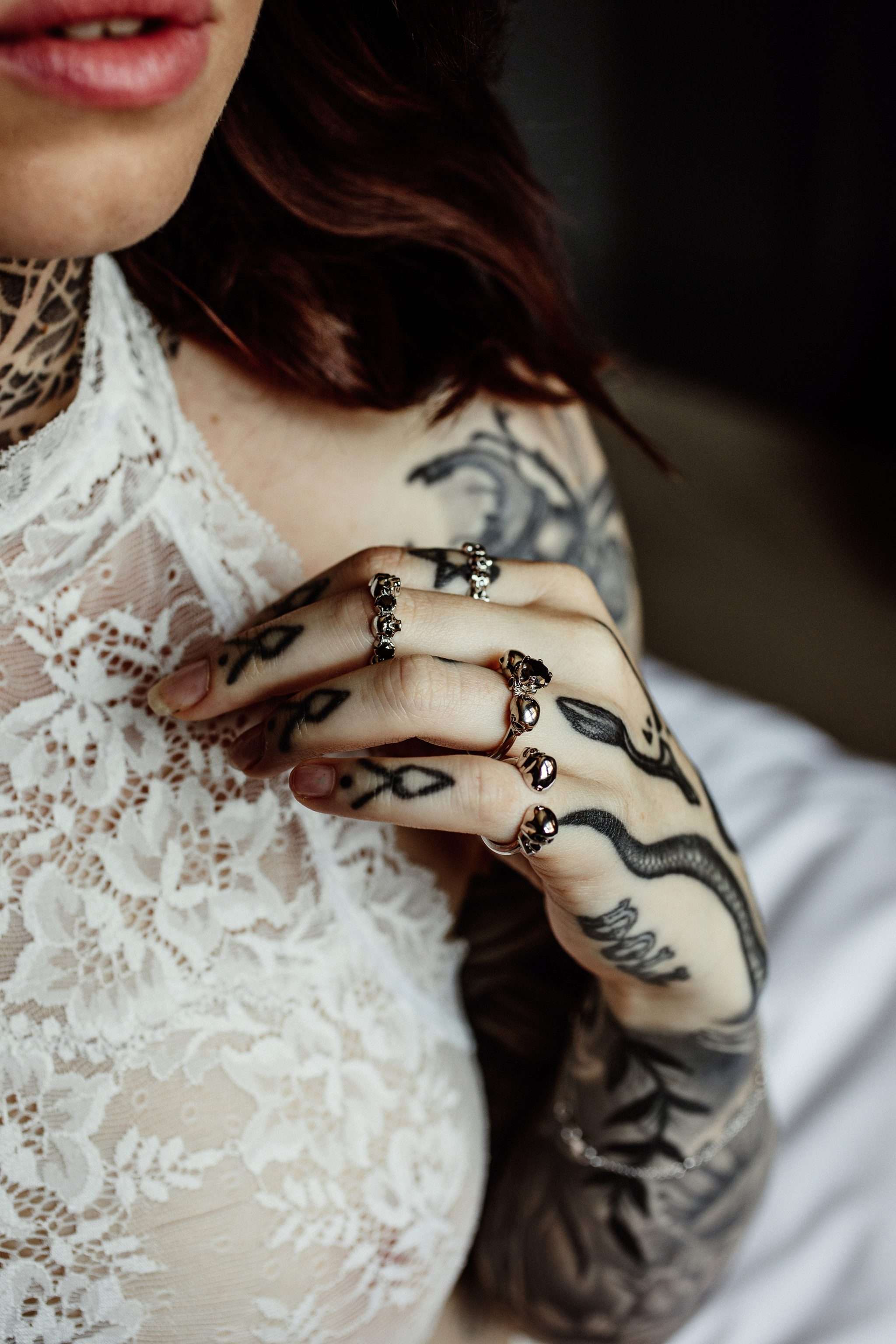
When selecting an engagement ring stone, durability is one of the most important factors to consider, as you’ll be wearing it every day.
Softer stones like opals, pearls or turquoise can still make beautiful rings, but they wouldn’t be recommended for engagement as they are quite soft and/ or porous so can get damaged easily. Some people still choose softer stones for engagement rings because they love the look or meaning behind them. In those cases, a protective setting like a bezel or halo can help reduce the risk of damage. And some couples simply accept that the ring may evolve with time and that a little wear and tear can become part of the story.
Suppliers
- Photography: Devlin Photos
- Jewellery: Iz&Co.
- Shoot for: Rock n Roll Bride magazine